
The history of Newfoundland and Labrador is the story of people shaped by the sea, where survival, prosperity, and identity have been bound to the waters of the North Atlantic for more than 9,000 years. This maritime heritage encompasses the Indigenous peoples who first navigated these coasts, European explorers who transformed fishing banks into colonial outposts, and generations of outport communities whose entire existence revolved around the daily rhythms of fishing, sealing, and shipbuilding.
Understanding this history means recognizing why coastal communities developed distinct dialects, why fishing stages and saltbox houses dot every harbor, and why sealing voyages and shipwrecks remain central to local memory. The province didn’t join Canada until 1949, remaining Britain’s oldest colony for centuries precisely because its value lay offshore, in the cod fishery that fed Europe.
Today’s visitors encounter this heritage everywhere: at archaeological sites preserving 500-year-old Basque whaling operations, in restored fishing villages where interpreters demonstrate cod splitting techniques, and through stories of Maritime Archaic peoples and Beothuk communities whose relationship with coastal resources predated European contact by thousands of years.
This article traces how geography, resources, and human determination created a culture unlike any other in Canada, one where the sea wasn’t merely important but defined everything. From pre-contact Indigenous maritime adaptations through colonial competition to confederation and beyond, Newfoundland and Labrador’s story is written in salt spray and船timber.
What Newfoundland and Labrador Maritime Heritage Means
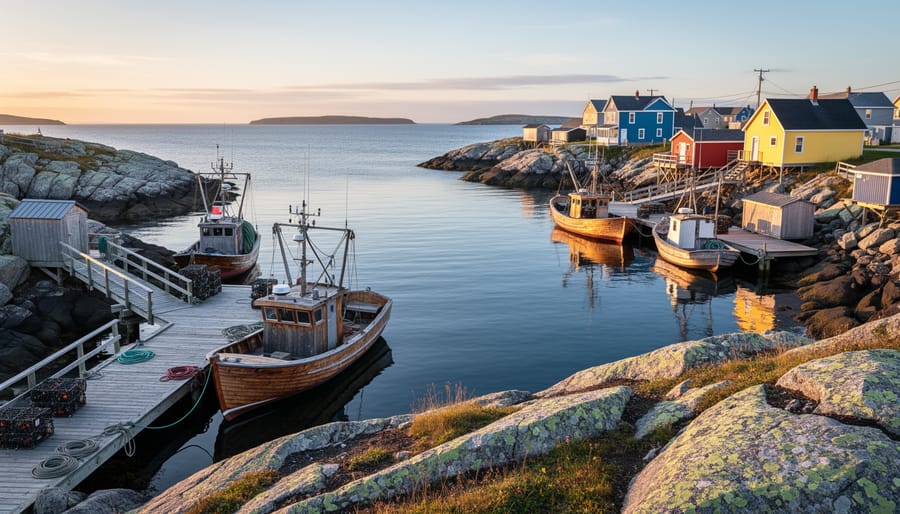
Maritime heritage in Newfoundland and Labrador means everything the ocean gave this place, the structures people built, the work they did, and the stories they passed down through centuries of living by the sea. It’s the physical world of weathered wharves and wooden boats, but it’s equally the knowledge of reading the weather, the rhythm of a sea shanty, and the particular way communities organized themselves around the fishery.
The tangible side includes what you can touch and photograph. Fishing stages perch on stilts over the water. Lighthouses mark dangerous headlands. Schooners rest in harbours, and dories stack on rocky beaches. Salt fish premises, where cod was split and dried, still stand in some outports. These structures weren’t decorative, they were the working infrastructure of survival, built to withstand North Atlantic gales and serve families for generations.
- Maritime heritage
- The combined physical artifacts and cultural practices created by centuries of dependence on ocean resources for survival and identity.
- Outport culture
- The distinctive way of life in small coastal communities isolated from larger centers, where residents relied almost entirely on fishing and maintained strong mutual support networks.
- Fishing rooms
- The shoreside work areas where fish were landed, processed, salted, and dried, the economic heart of each coastal settlement.
- Grand Banks
- The rich underwater plateau southeast of Newfoundland where cold Labrador Current meets warm Gulf Stream, creating one of the world’s most productive fishing grounds for centuries.
- Sealing tradition
- The annual spring hunt for harp seals on ice floes, which provided crucial income and supplies during lean months between fishing seasons.
The intangible heritage lives in what people know and remember. It’s the specialized vocabulary, longliner, stage head, landwash, that names a maritime world. It’s the skill of building a punt by eye without plans, or knowing which cove offers shelter in an easterly blow. Folk songs preserve stories of ships lost and catches landed. Recipes transform salt cod into fishcakes and fish and brewis. These traditions aren’t museum pieces; they’re active knowledge that shaped how Newfoundlanders and Labradorians see themselves and their province, where identity flows as much from the ocean as from the rock.
How Maritime Heritage Developed in Newfoundland and Labrador
Indigenous Maritime Traditions: The First Seafarers
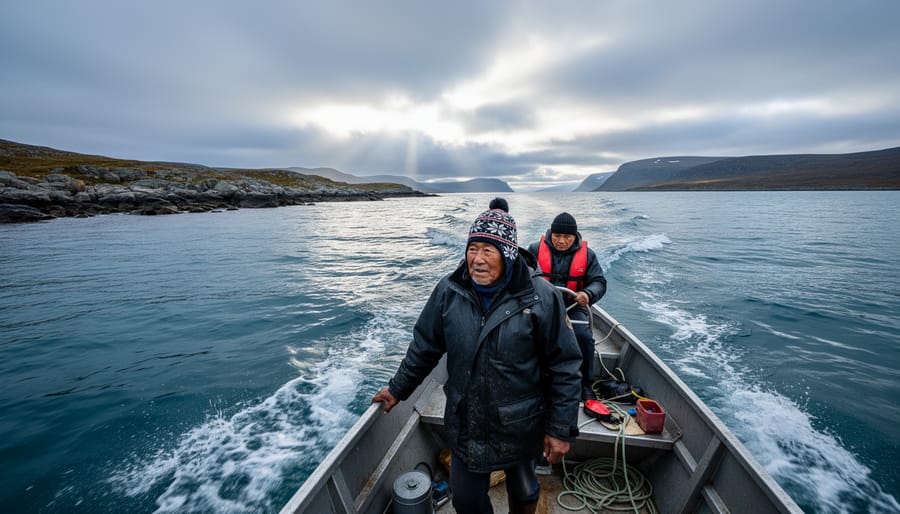
Long before European sails appeared on the horizon, Indigenous peoples navigated Newfoundland and Labrador’s waters with sophisticated maritime knowledge accumulated over millennia. The Beothuk people established seasonal camps along the island’s coast, harvesting seals during spring migrations and fishing for salmon, cod, and shellfish. They crafted birchbark canoes specifically designed for coastal travel, using marine resources to supplement their caribou hunting inland.
In Labrador, Inuit communities developed one of the world’s most advanced maritime hunting cultures. The kayak, a sleek, one-person hunting vessel, allowed hunters to pursue seals, walruses, and even whales with remarkable efficiency. For larger expeditions and family travel, they built umiaks, open skin boats capable of carrying multiple people and substantial cargo across treacherous waters. These vessels required intimate knowledge of currents, ice conditions, and marine animal behavior.
Seasonal migration patterns governed life for both groups. Inuit families moved between winter settlements and summer fishing camps, timing their journeys to coincide with seal pupping seasons, char runs, and whale migrations. This wasn’t random wandering but precisely calibrated movement based on generations of observation.
Knowledge passed orally from elder to youth: how to read weather in cloud formations, predict ice breakup, locate fishing grounds, and survive capsizing in frigid water. These maritime traditions represented thousands of years of accumulated wisdom, creating a deep cultural connection to the sea that predated European contact by countless generations.
European Fishing Empires and Settlement (1497-1700s)
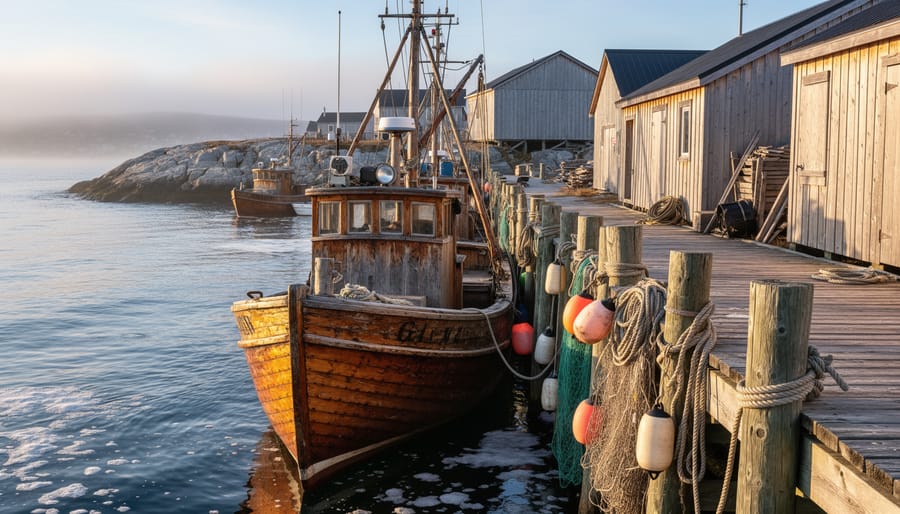
John Cabot’s 1497 voyage opened Newfoundland’s waters to European fishing fleets, though Norse explorers had reached L’Anse aux Meadows five centuries earlier. What drew successive waves of ships wasn’t colonization but cod, dense schools that seemed inexhaustible.
Basque whalers established seasonal stations at Red Bay and other Labrador harbours by the 1530s, rendering whale oil in massive tryworks before sailing home each autumn. English, French, Spanish and Portuguese vessels soon crowded the Grand Banks and inshore waters, their crews salt-curing catch on makeshift flakes erected along the coast. This migratory pattern, fish all summer, return to Europe for winter, dominated for two centuries.
Gradually, some fishermen stayed. English merchants established permanent stations in the 1600s, hiring servants who might settle after their contracts expired. French colonists planted roots on the Avalon Peninsula and along the south coast. These early residents formed isolated outport communities, each clustered around a harbour where fishing boats could shelter and stages could process the catch.
The cod fishery history shows how this single resource shaped settlement patterns, with families claiming coves accessible only by boat. Rudimentary shipyards appeared to build and repair the schooners, shallops and smaller craft essential to the fishery. By the early 1700s, a distinct maritime society had taken root, its rhythms set by cod migrations and Atlantic storms.
Building a Maritime Colony (1700s-1949)
As communities transitioned from seasonal fishing camps to year-round settlements throughout the 1700s and 1800s, Newfoundland developed into a true maritime colony with a distinct economy and culture shaped entirely by the sea. The outport network expanded along thousands of miles of coastline, with families establishing permanent fishing stations that would support generations. Each settlement relied on a merchant who provided supplies, fishing gear, and provisions on credit in spring, then purchased the dried cod in fall, a debt-based system called the truck system that bound fishers to particular merchants and created cycles of poverty for many families.
The sealing industry emerged as a crucial winter enterprise in the early 1800s, sending wooden ships and thousands of men onto the ice floes each spring to harvest seal pelts. This dangerous work provided essential income during fishing’s off-season but claimed hundreds of lives in disasters like the 1914 Newfoundland Sealing Disaster. Shipbuilding boomed to supply these industries, with yards in harbours across the island constructing schooners, banking vessels, and sealing steamers using local timber.
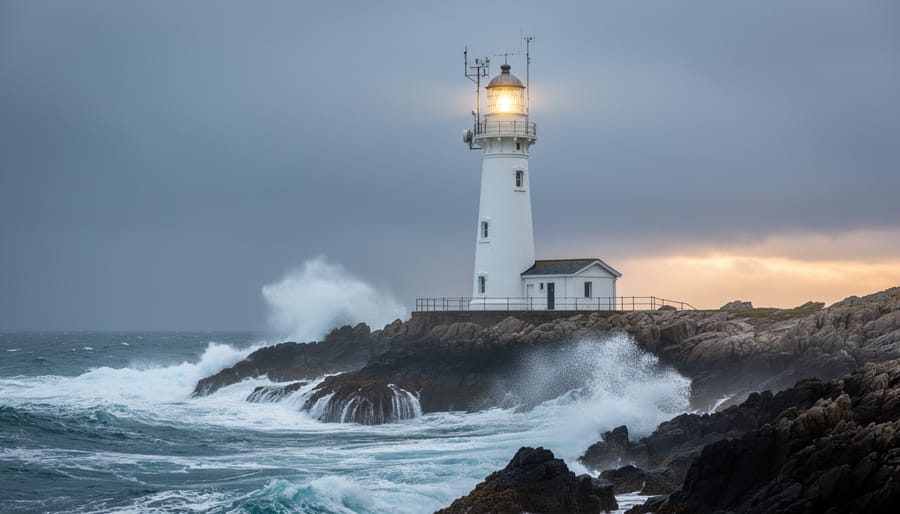
Navigation improvements came slowly. Britain authorized lighthouses authorized in 1832 for key points along the coast, though many dangerous passages remained unmarked for decades. Maritime disasters, from shipwrecks in fog to vessels lost in storms, shaped community memory and reinforced the sea’s power over daily life.
Women formed the backbone of the shore fishery, splitting and salting cod on fishing stages, managing households during men’s months-long absences, and processing catches that determined family survival. Their labour, though essential, rarely appeared in official records or received monetary compensation within the merchant credit system.
Modern Maritime Identity (1949-Present)
Joining Canada in 1949 brought Newfoundland and Labrador into a new political reality, but the sea remained central to daily life. Fishing communities continued their generations-old rhythms until the cod moratorium in 1992 shattered the province’s economic foundation. Overnight, 30,000 workers lost their livelihoods, and centuries of fishing culture faced an existential threat.
The crisis forced communities to adapt. Offshore oil development in the Grand Banks brought new maritime work, though it lacked the cultural continuity of fishing. Tourism emerged as an economic lifeline, with visitors seeking authentic outport experiences and maritime heritage sites. Museums like The Rooms and the Fisheries Museum of the Atlantic began preserving what remained, vessels, tools, photographs, stories, while festivals celebrated traditional music and boat-building skills.
Rather than disappearing, maritime identity transformed. Young musicians revived sea shanties, blending them with contemporary sounds. Craftspeople learned traditional boat-building techniques from aging masters. Communities turned restored fishing premises into heritage centers. The ocean’s pull persisted through different work, different stories, but the same fundamental connection.
Today’s Newfoundlanders balance offshore careers with inherited maritime knowledge, weekend fishing trips with heritage tourism, modern life with songs their grandparents sang at sea. The relationship changed, but it endures.
Components of Newfoundland and Labrador’s Maritime Heritage
Historic Vessels and Boat Types
The wooden vessels that plied Newfoundland and Labrador waters reflected both imported European traditions and adaptations to local conditions. Fishing schooners, typically 40 to 80 feet long, served as floating bases for the offshore cod fishery, carrying crews and dories to the Grand Banks. These graceful two-masted vessels combined storage capacity with seaworthiness, evolving distinctive features like wider beams for stability in North Atlantic swells.
Dories became the workhorses of the fishery: flat-bottomed, narrow rowing boats that nested inside each other on schooner decks. Their design allowed fishermen to reach distant fishing grounds, handle heavy catches, and beach easily in rough conditions. Smaller punts and trap skiffs served inshore fishermen, built short and stable for retrieving cod traps near shore.
Sealing ships required reinforced bows and hulls to penetrate ice fields. The SS Terra Nova, now preserved in Britain, represents this specialized fleet that departed St. John’s each spring for the seal hunt, a brutal but economically vital industry.
Traditional boat building relied on knowledge passed father to son. Builders worked without plans, shaping hulls by eye and selecting timber based on grain patterns. Communities like Winterton and Petty Harbour maintained these skills into the 1900s, creating vessels perfectly matched to local waters and fishing methods.
Maritime Sites and Structures
The physical landscape of Newfoundland and Labrador tells the story of maritime life through structures built to harness and withstand the sea. Lighthouses dot the rugged coastline, some still operational, others preserved as museums, guiding vessels through treacherous waters where countless ships met their fate. Cape Spear Lighthouse near St. John’s, North America’s most easterly point, stands as the oldest surviving lighthouse in the province, its 1836 tower now interpreted as a National Historic Site.
Fishing stages, those distinctive wooden platforms extending over the water, once lined every harbour and cove. These working structures housed splitting tables where crews processed the day’s catch, with attached flakes (wooden drying racks) spreading cod across the landscape like white carpets in summer sun. Salt fish premises combined storage sheds, merchant spaces, and processing areas into compact waterfront complexes that defined outport commerce for generations.
Notable heritage sites across the province include:
- Red Bay Basque Whaling Station (UNESCO World Heritage Site), 16th-century whaling operation with preserved chalupas and tryworks
- Battle Harbour, restored 1800s merchant premises and saltfish operation accessible by boat
- Bonavista, Ryan Premises National Historic Site featuring merchant buildings and fishing stages
- Trinity, extensive collection of preserved 18th and 19th-century merchant houses and waterfront structures
- Ferryland, Colony of Avalon archaeological site revealing 17th-century settlement patterns
Outport architecture itself reflects maritime adaptation: steeply pitched roofs shed heavy snow, brightly painted clapboard resists salt spray, and placement on rocky headlands provides both harbour access and protection from storm surges. Shipyards in communities like Clarenville and Harbour Grace, though largely quiet now, preserve the slipways and timber-frame sheds where schooners took shape. These structures, whether museum-restored or weathering gracefully in abandoned settlements, anchor maritime heritage in physical reality.
Maritime Industries and Practices
The cod fishery dominated Newfoundland’s economy for over 400 years, with fishing families following seasonal rhythms dictated by fish migrations and weather patterns. Fishermen worked from small boats called dories, setting cod traps near shore or handlining on the Banks. Women and children processed the catch on stages, wooden platforms extending over the water, splitting, salting, and drying cod on flakes (raised racks of wooden boughs). The inshore fishery operated close to historic fishing sites along the coast, while larger schooners ventured to Grand Banks for weeks at a time.
The seal hunt brought spring employment when men traveled on ice to harvest seals for pelts and oil. Whaling operations, particularly the Basque stations at Red Bay in the 1500s, rendered whale blubber into valuable oil. Lobster fishing developed later as a commercial fishery, with distinctive wooden traps still used today.
Merchant premises controlled trade through the truck system, extending credit for supplies against future catches. Navigation relied on knowledge passed between generations, reading currents, recognizing landmarks, interpreting cloud formations and wind shifts for weather forecasting. Marine salvage became both necessity and opportunity in treacherous waters where shipwrecks were frequent.
Cultural Traditions and Intangible Heritage
The sea shaped not just what people in Newfoundland and Labrador did, but how they spoke, sang, and made sense of the world. Maritime traditions run through the province’s language, music, and daily practices in ways that remain vibrant in 2026.
Sea shanties and fishing songs form the soundtrack of outport life. “I’se the B’y” celebrates fishing and boat handling, while “The Kelligrews Soiree” preserves the rhythm of community gatherings. These songs weren’t entertainment alone, they coordinated work aboard vessels, passed down navigation warnings through verse, and kept spirits up during dangerous voyages. Modern musicians still draw from this repertoire, proving its enduring resonance.
The dialect itself carries maritime DNA. Words like “crunnick” (a small fishing boat), “ballicatter” (ice clinging to a vessel), and “sish” (newly formed sea ice) describe conditions that matter to survival. Phrases reflect seafaring logic: “long may your big jib draw” wishes someone good fortune, borrowing from sail mechanics.
Storytelling preserved practical knowledge wrapped in entertainment. Tales of phantom ships warned of dangerous waters, while yarns about legendary catches taught fishing techniques. Elders passed down weather prediction methods, the appearance of certain clouds, seabird behavior, ocean swell patterns, that helped crews survive before modern forecasting.
Folk art transformed maritime materials into beauty. Carved seabirds, intricate boat models, hooked mats depicting fishing scenes, and painted buoys turned utilitarian objects into cultural expression. These crafts continue in workshops across the province, connecting contemporary artists to ancestral skills.
How Maritime Heritage Shaped Newfoundland and Labrador Society
Cultural Identity and Community Connection
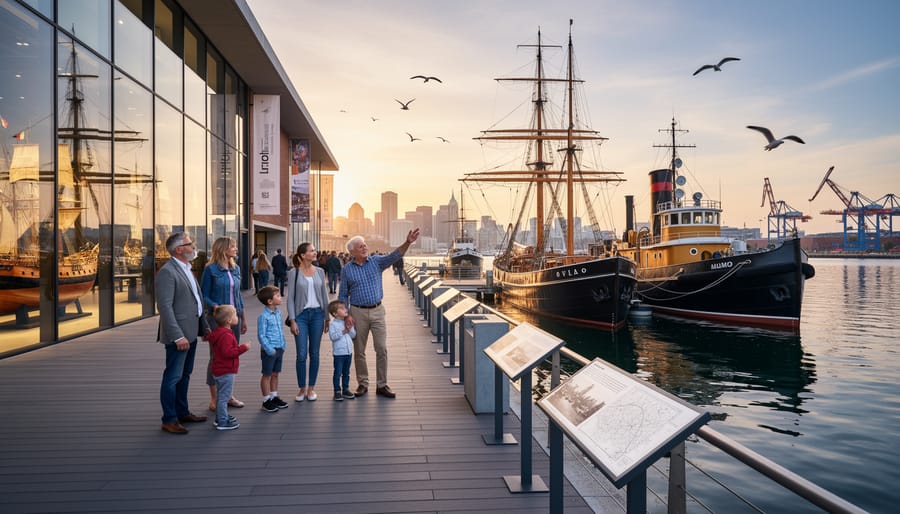
The ocean isn’t just scenery in Newfoundland and Labrador, it’s the thread that stitches families, generations, and communities together. When a Newfoundlander says “I’m from the bay,” they’re invoking a maritime geography that defines identity more precisely than provincial borders ever could. This attachment to coastal place runs deep, shaping everything from speech patterns to sense of self.
Maritime heritage keeps outport culture alive even as young people leave for work elsewhere. Grandchildren who’ve never hauled a trap still learn sea shanties at kitchen parties. Families scattered across Canada return each summer to ancestral fishing villages, maintaining homes their great-grandparents built beside the same harbour. The rituals persist: splitting fish at family reunions, telling storm stories, arguing about proper boat-building techniques.
This connection fueled Newfoundland nationalism long before confederation and strengthens provincial pride today. The maritime past offers proof of resilience, communities that survived isolation, dangerous work, and economic upheaval. When Newfoundlanders reference “living on the edge of the sea,” they’re claiming an identity forged by that very precariousness, celebrating ancestors who thrived where the land met saltwater.
Heritage Tourism and Economic Development
Maritime heritage tourism has become a significant economic driver for Newfoundland and Labrador’s coastal communities. In 2026, visitors spend millions annually exploring the province’s seafaring past through diverse experiences that bring history to life.
Maritime museums anchor this sector. The Rooms in St. John’s houses extensive collections of fishing gear, navigation instruments, and ship models. Smaller community museums like Twillingate’s showcase local maritime stories. Historic vessels such as wooden schooners offer harbour tours and multi-day sailing experiences, letting visitors feel the power of traditional seafaring firsthand.
Lighthouses across the province have been repurposed as tourist attractions. Cape Spear draws thousands yearly to Canada’s easternmost point, while restored keeper’s quarters at Point Amour offer overnight stays. These sites create jobs for guides, maintenance staff, and hospitality workers in rural areas with limited employment options.
Cultural festivals amplify economic benefits. The Royal St. John’s Regatta, North America’s oldest continuing sporting event, and the Fish, Fun and Folk Festival in Twillingate attract tourists during peak season. Boat-building demonstrations at festivals and heritage sites preserve traditional skills while generating admission revenue. This tourism supports local businesses, restaurants, accommodations, craft shops, creating a multiplier effect that extends well beyond individual attractions.
Education and Knowledge Preservation
Educational institutions and community organizations across Newfoundland and Labrador work to preserve maritime knowledge through diverse programs that engage younger generations. The Provincial Museum Division operates living history demonstrations at sites like Ryan Premises National Historic Site, where interpreters show traditional fish splitting and salting techniques that defined outport economies for centuries.
Memorial University’s Maritime History Archive houses over 200,000 shipping documents, crew agreements, and merchant records, providing researchers worldwide with primary sources tracing the province’s seafaring past. The university’s Folklore Department conducts oral history projects that record the memories of retired fishers, boat builders, and lighthouse keepers before this firsthand knowledge disappears.
Traditional skills workshops offered by groups like the Wooden Boat Museum of Newfoundland and Labrador teach participants to build dories and repair traditional vessels using historic methods. These hands-on programs transform abstract heritage into practical knowledge that participants can apply and share.
The provincial school curriculum now integrates maritime heritage studies, with students analyzing fishing station archaeology, transcribing ship logs, and interviewing community elders. Digital archives like Heritage NL’s online collections make photographs, maps, and documents accessible globally, ensuring maritime knowledge reaches audiences far beyond coastal communities.
Contemporary Cultural Expression
Maritime heritage lives, breathes, and evolves through Newfoundland and Labrador’s vibrant contemporary arts scene. Musicians like The Once and Fortunate Ones weave traditional sea shanties into modern folk compositions, while Great Big Sea’s legacy continues inspiring new generations to reinterpret fishing ballads. Visual artists such as David Blackwood capture outport life through haunting prints of sealing voyages and coastal communities. Writers like Michael Crummey and Lisa Moore set novels against backdrops of fishing families and maritime disasters, bringing historical experiences to contemporary readers. Documentary filmmakers chronicle changing fishing communities, preserving stories of the cod moratorium and its aftermath. Traditional boat builders teach apprentices centuries-old schooner construction methods, ensuring skills survive beyond their originators. These creative expressions connect island traditions to present-day audiences, proving maritime culture remains a living force rather than museum artifact. Annual events like the Fish, Fun and Folk Festival showcase this cultural continuity, where heritage songs meet original compositions inspired by the same sea.
Experiencing Maritime Heritage Today
Standing at the window of The Rooms overlooking St. John’s harbour, you watch fishing boats navigate the Narrows as they have for centuries, and you realize Newfoundland and Labrador’s maritime heritage isn’t locked behind glass. It’s alive in every harbour, museum, and coastal community waiting to share its story.
Start your exploration at major interpretive centers that bring seafaring history to vivid life. The Rooms in St. John’s houses extensive maritime collections including historic vessels, fishing gear, and navigation instruments. The Ryan Premises National Historic Site in Bonavista recreates a 19th-century saltfish merchant operation where you can walk through restored buildings and understand the credit system that governed outport life. In Red Bay, Labrador, the UNESCO World Heritage site showcases 16th-century Basque whaling operations through artifacts recovered from underwater archaeological excavations, you can see an actual whaling chalupa preserved for 450 years in cold Labrador waters.
- The Rooms in St. John’s: Maritime galleries with vessel collections and navigation instruments
- Ryan Premises National Historic Site, Bonavista: Restored saltfish merchant complex
- Red Bay National Historic Site: UNESCO Basque whaling station with preserved vessels
- Wooden Boat Museum of Newfoundland and Labrador, Winterton: Traditional boat-building demonstrations
- Maritime Archaic Burial Mound, Port au Choix: 4,000-year-old seafaring culture site
- Cape Spear Lighthouse: North America’s most easterly point with restored 1830s keeper’s quarters
Beyond museums, experience living maritime culture through festivals and workshops. The Bonavista Heritage Festival in June features traditional boat races and folk music. Wooden boat-building workshops at Winterton teach centuries-old construction techniques using hand tools. Harbour tours aboard heritage vessels like schooners let you feel what working the Grand Banks meant to generations of fishers.
For those unable to visit physically, a virtual field trip through digitized collections and 360-degree site tours makes maritime heritage accessible anywhere. Many institutions now offer online exhibits showcasing artifacts, oral histories, and interactive timelines.
Finding historic places near you reveals that nearly every Newfoundland and Labrador community has maritime stories to tell, whether through a preserved lighthouse, a fishing stage still used today, or local storytellers who share memories passed down through fishing families. The heritage lives wherever communities maintain their connection to the sea.
Preserving Maritime Heritage for Future Generations
Preserving Newfoundland and Labrador’s maritime heritage faces urgent challenges that threaten both physical sites and living traditions. Rising sea levels and intensifying storms, driven by climate change, erode historic fishing stages, wharves, and archaeological sites along exposed coastlines. The 2026 assessment by Heritage NL identified 37 significant maritime structures at immediate risk from coastal erosion, including century-old fishing premises that survived generations of Atlantic weather but now face accelerated deterioration.
Depopulation compounds these physical threats. As younger generations leave outport communities for employment elsewhere, fewer people remain to maintain historic buildings, practice traditional boat-building, or transmit specialized knowledge about fishing techniques and navigation. The province has lost 23 outport communities since 1992, taking with them irreplaceable concentrations of maritime culture and oral history. When an elderly fisherman or boat builder passes without sharing their expertise, centuries of accumulated knowledge disappears.
Funding constraints force difficult choices. Provincial heritage organizations operate on budgets that cover basic preservation but cannot address every threatened site. Museums struggle with maintenance costs for historic vessels, keeping a wooden schooner seaworthy requires constant attention and specialized craftspeople whose skills are increasingly scarce.
Yet preservation efforts continue with determination. Digitization projects now record oral histories before they vanish, creating accessible archives of traditional songs, fishing stories, and technical knowledge. The Community Museums Association supports small outport heritage centers through training and resource-sharing. Youth engagement programs teach traditional boat-building and navigation skills, connecting teenagers with master craftspeople. Universities partner with communities on heritage documentation.
The most successful preservation recognizes that maritime culture must remain living, not frozen. Communities adapt traditions to contemporary contexts, traditional music evolves with new compositions about current fishing realities, boat builders incorporate modern materials when historically appropriate, interpretive programs engage visitors through immersive experiences rather than static displays. Heritage survives by remaining relevant.
How Newfoundland and Labrador S Maritime Heritage Works
Maritime heritage functions as a continuous cycle where ocean-based activities generate cultural practices, which then get preserved, interpreted, and passed forward to shape new generations. The process starts with direct interaction, fishers learning tides and weather, boat builders mastering wood selection, navigators reading stars and coastlines. These practical skills create knowledge systems that communities encode through stories, songs, and hands-on teaching.
As economic conditions shift, communities face a choice: let traditions fade or actively preserve them. Preservation happens through multiple channels. Museums collect artifacts and record oral histories. Cultural organizations teach traditional skills through workshops. Festivals recreate historical practices in public settings. Artists reinterpret maritime themes for contemporary audiences.
This preserved heritage then feeds back into community identity. Young people discover their roots through heritage programs. Tourists bring economic support that funds preservation. Researchers document techniques before knowledge holders pass away. The cycle continues as each generation selects which elements to maintain, which to adapt, and which to memorialize.
The system works because maritime heritage isn’t static, it evolves while maintaining connection to core practices that defined Newfoundland and Labrador’s relationship with the sea.
Newfoundland and Labrador’s maritime heritage stands as more than historical curiosity, it’s the foundation of a living culture forged between land and sea. From Indigenous kayakers reading ice conditions to outport communities maintaining centuries-old fishing knowledge, this relationship with the ocean created a distinct society that persists despite economic upheaval. The vessels, songs, buildings, and traditions explored here aren’t museum pieces frozen in time but threads connecting past resilience to present identity.
Understanding this maritime past transforms how you see the province today. The weathered fishing stage becomes a monument to adaptation. The sea shanty carries navigation wisdom. The abandoned outport whispers stories of communities that thrived against impossible odds. These aren’t remnants of a dead culture but roots of an evolving one, where offshore oil workers carry the same seafaring spirit as their fishing ancestors, and folk musicians reimagine traditional songs for new audiences.
What is the most important maritime heritage site in Newfoundland and Labrador?
The Red Bay Basque Whaling Station holds UNESCO World Heritage status as the most intact 16th-century whaling operation, though sites like Signal Hill and the numerous restored lighthouses offer equally powerful connections to maritime history.
How did the cod moratorium affect maritime culture?
The 1992 moratorium ended a 500-year fishing tradition overnight, devastating outport economies and forcing mass migration. Yet it intensified efforts to preserve maritime heritage, as communities recognized their culture’s fragility and began documenting traditions before they disappeared.
Can you still see traditional boat building in Newfoundland and Labrador?
Yes, several communities maintain traditional wooden boat building through heritage programs, apprenticeships, and festivals. Skilled builders still construct dories, punts, and trap skiffs using techniques passed down through generations.
What Indigenous maritime traditions survived European contact?
Inuit communities in Labrador maintain kayak building knowledge, seal hunting practices, and sophisticated understanding of ice navigation. These traditions continue as both cultural practice and practical skills for northern coastal life.
This heritage needs active stewardship. Visit the museums, attend the festivals, support preservation projects, learn the songs. Listen to elders who remember different times. Each engagement keeps the knowledge alive and helps shape how future generations connect with their maritime identity. The sea shaped Newfoundland and Labrador, but conscious effort will determine whether that shaping continues as vibrant culture or fades into nostalgia.
