
Canada’s preserved fishing heritage sites offer immersive journeys into centuries-old maritime traditions, from coastal canneries where salmon once filled thousands of tins daily to indigenous fishing grounds that sustained communities for millennia. Visiting these locations connects you directly with the industry that built coastal economies, shaped immigration patterns, and forged the cultural identity of waterfront communities across the nation. The experience goes far beyond reading plaques: you’ll walk weathered docks where fishermen hauled their catch, explore processing facilities frozen in time, and discover how indigenous peoples engineered sophisticated fish weirs and smoking techniques that predated European contact by thousands of years.
These destinations serve multiple purposes for today’s visitors. History enthusiasts find richly documented stories of technological innovation and labour movements. Educators discover living classrooms where students can trace connections between natural resources and nation-building. Cultural explorers encounter diverse heritage narratives, from Japanese-Canadian cannery workers to Newfoundland outport traditions. Many sites now offer virtual field trips alongside physical visits, making this heritage accessible year-round.
The fishing industry’s footprint stretches from Atlantic cod grounds to Pacific salmon runs, each region presenting distinct architectural styles, preservation challenges, and cultural stories. Understanding what each site offers helps you plan visits that align with your interests, whether you’re drawn to industrial archaeology, indigenous heritage, or the intimate details of daily life in fishing communities a century ago.
Why Visit Historic Fishing Sites
Canada’s fishing heritage sites offer a window into the forces that shaped the nation. For centuries, fishing was the economic heartbeat of coastal and inland communities, driving settlement patterns, trade routes, and cultural exchange from Newfoundland’s Grand Banks to British Columbia’s Fraser River. These preserved locations tell stories that textbooks skim over: the backbreaking labour of saltfish processing, the ingenuity of cannery workers, the seasonal rhythms that governed entire communities.
Unlike other historical places near me fishing sites remain connected to living traditions. You’ll encounter working wharves where boats still unload catches, smell the salt air in preserved outports, and see tools that haven’t changed in generations. The authenticity is visceral, these aren’t sanitized reconstructions but real waterfronts where generations earned their livelihoods.
The cultural layers run deep. Indigenous peoples developed sophisticated fishing techniques millennia before European contact, knowledge that sustained communities and shaped early trade relationships. Sites like Battle Harbour and Steveston reveal how diverse groups, Mi’kmaq, Japanese-Canadian, Acadian, Icelandic, each brought distinct practices that enriched Canada’s fishing mosaic. Some locations even connect to broader narratives, including early contact with Vikings in Canada who established fishing camps on Newfoundland’s shores.
What makes these sites compelling is their range. Atlantic cod stations differ dramatically from Pacific salmon canneries. Inland freshwater operations on Lake Winnipeg tell different stories than tidal Bay of Fundy weirs. Each region developed unique processing methods, boat designs, and community structures adapted to local conditions.
Visiting during shoulder seasons enhances the experience. Spring and fall bring migration patterns, weather changes, and a sense of the unpredictability that fishers faced. You’ll understand why timing mattered, why certain techniques evolved, and how entire economies hung on seasonal abundance.
Top Historic Fishing Sites to Explore
1. Lunenburg, Nova Scotia
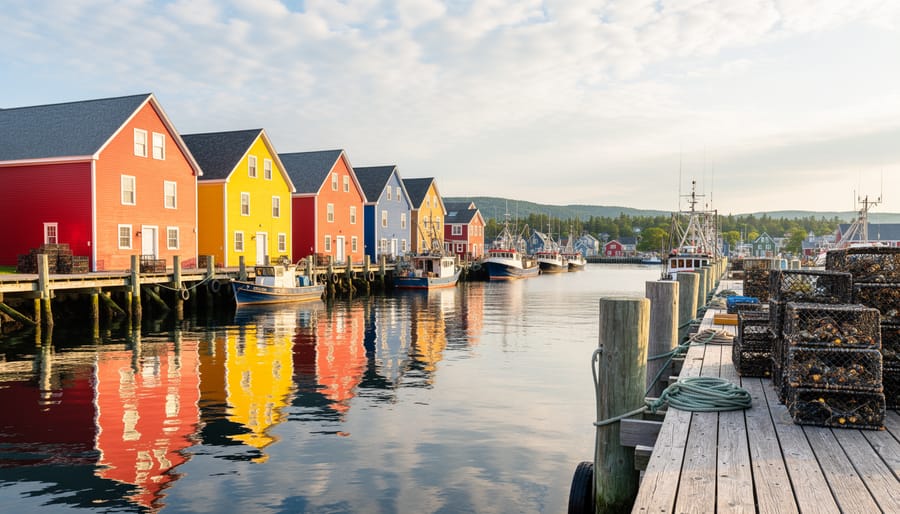
Lunenburg stands as Atlantic Canada’s most complete example of a working fishing port frozen in time. The Old Town Lunenburg waterfront earned UNESCO status in 1995 for its remarkably intact wooden architecture and grid layout dating to 1753, when Protestant settlers established what would become the birthplace of Canada’s offshore schooner fleet. Walk the sloping streets where generations of fishing families lived within sight of their vessels, and the salt-weathered clapboard houses painted in bold maritime colours still rise directly from the harbour’s edge.
The Fisheries Museum of the Atlantic anchors your visit with two historic schooners moored at its wharf, the salt-banker Theresa E. Connor and the rum-runner Bluenose II replica berthed nearby. Inside, aquarium tanks holding Atlantic species share space with a working dory shop where craftsmen build boats using 19th-century techniques. The museum’s best feature is its aquarium touch-tank staffed by interpreters who explain the cod stocks that once blackened these waters. Active fish processing plants still operate along the waterfront, their diesel generators humming as they have for decades.
2. Steveston, British Columbia
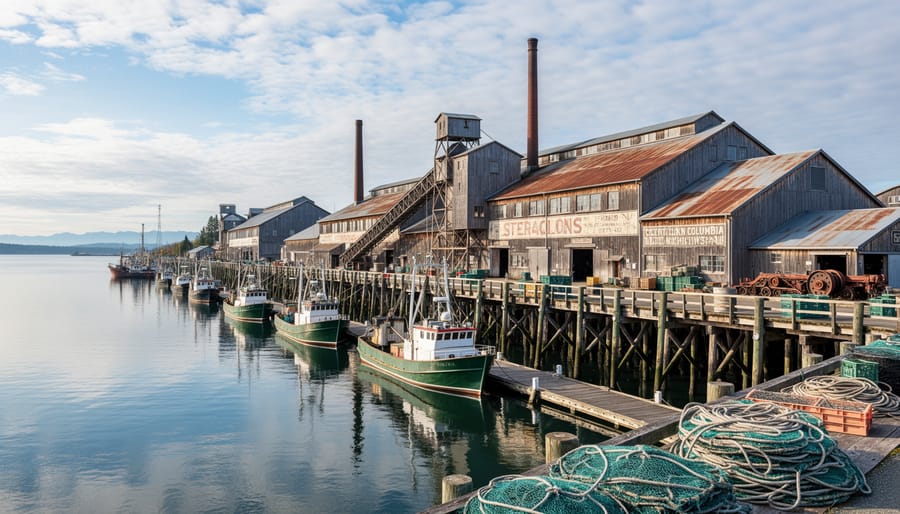
Steveston rose from a muddy fishing camp to become the world’s largest salmon canning centre in the early 1900s, processing millions of sockeye returning to spawn in the Fraser River. At its peak, 15 canneries lined the waterfront, employing thousands of workers from Japan, China, Indigenous communities, and Europe in a seasonal rush that defined coastal British Columbia’s economy. The Gulf of Georgia Cannery National Historic Site preserves one of these operations intact, with original machinery, canning lines, and the distinct smell of cedar and iron that filled the buildings during packing season.
Walk the restored waterfront today and you’ll trace the progression from gillnet boats moored at wooden docks to the processing sheds where workers gutted, cleaned, and packed fish into tins by hand before automation arrived. Japanese-Canadian heritage runs deep here, fishermen from Japan pioneered gillnetting techniques on the Fraser and built a thriving community until the 1942 internment scattered families and seized their boats. Plaques and interpretive panels honour this history along Moncton Street, where Buddhist temples once stood and fishing families gathered after dawn departures.
3. Battle Harbour, Newfoundland and Labrador
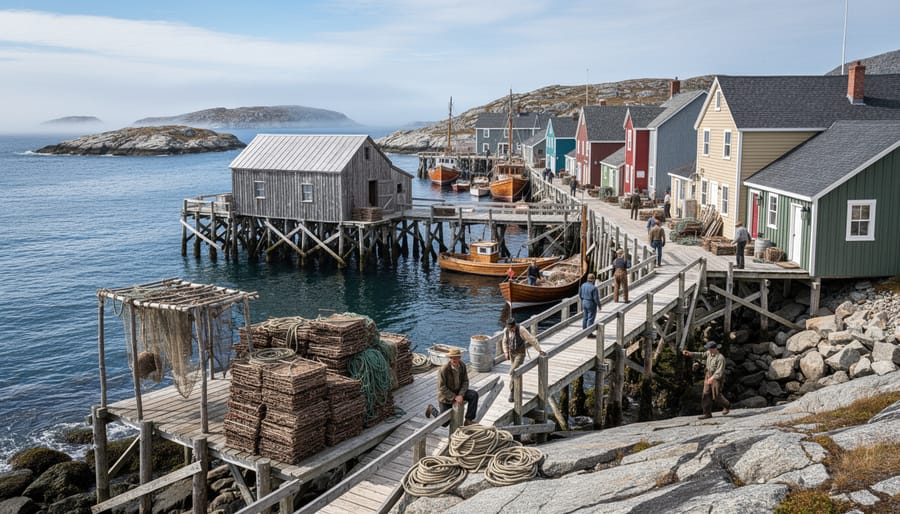
Battle Harbour sits on a windswept island off Labrador’s southern coast, frozen in time as one of Atlantic Canada’s most complete 19th-century saltfish operations. Accessible only by passenger ferry from Mary’s Harbour (weather permitting), this restored merchant premises operated continuously from the 1770s until 1965, when changing economic conditions emptied the community almost overnight.
The preservation shows every stage of the saltfish trade that dominated Labrador’s economy. Walk through the merchant’s residence where fishing families settled accounts each season, explore the splitting rooms where crews processed thousands of cod daily, and examine the flake yards where salted fish dried on wooden racks under constant supervision. The whitewashed saltbox buildings, perched on bare rock overlooking the harbour entrance, illustrate the merchant-fisherman credit system that controlled outport life for generations.
Battle Harbour gained additional significance as Peary’s first landfall after reaching the North Pole in 1909. Several historic buildings now operate as atmospheric accommodations, letting visitors experience the isolation and stark beauty that shaped Labrador fishing culture. The site opens late June through early September, with overnight stays strongly recommended given the boat schedule and the settlement’s evocative twilight hours.
4. North Atlantic Fisheries Museum, Twillingate, Newfoundland
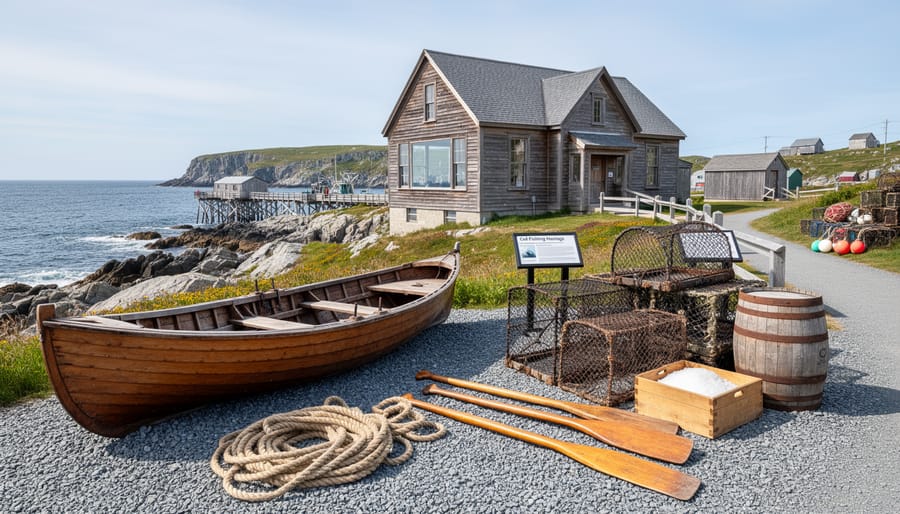
Perched on Newfoundland’s rugged northeast coast, the North Atlantic Fisheries Museum tells the story of Twillingate’s centuries-old relationship with the sea. This community-run museum captures the essence of outport fishing life through artifacts that residents themselves donated, creating an authentic portrait of the cod fishery that defined these shores.
The museum’s strength lies in its focus on the working lives of fishermen and their families. You’ll find traditional fishing gear, hand-built boats crafted using techniques passed down through generations, and displays explaining the salt cod trade that connected Twillingate to markets in Europe and the Caribbean. The sealing exhibits document this controversial but historically significant industry, presenting the economic realities and cultural practices without romanticizing the past.
What sets this museum apart is its grassroots character. Local volunteers often staff the facility and share personal stories about growing up in fishing families. The boat-building section showcases the craftsmanship required to construct vessels that could withstand North Atlantic storms, with actual tools and partially completed boats demonstrating the process.
Located in a town still active with fishing operations, the museum provides context for understanding how modern Twillingate evolved from its heritage roots while maintaining its maritime identity.
5. Cannery Row Heritage Area, Prince Rupert, British Columbia
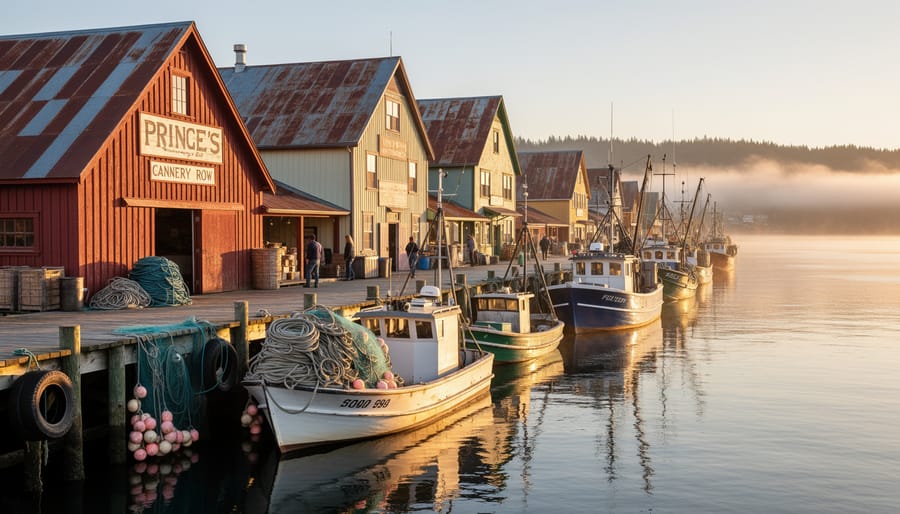
Prince Rupert’s Cannery Row Heritage Area sits where the Skeena River meets the Pacific, a strategic location that made it one of British Columbia’s most productive salmon canning centres from the 1880s through the mid-20th century. Unlike southern canneries, this district tells a distinctly multi-cultural story shaped by the North Coast’s geography and demographics.
The heritage area preserves cannery buildings that once processed millions of salmon annually, their wooden structures reflecting the architectural evolution from simple sheds to mechanized facilities. What makes this site exceptional is how clearly it demonstrates the layered contributions of different communities. First Nations fishers supplied the catch using traditional knowledge of salmon runs. Japanese-Canadian workers operated gillnet boats and managed shore operations. Chinese-Canadian crews handled the processing lines before mechanization. European merchants and Norwegian net-makers added their expertise to the industry’s tapestry.
Walking the waterfront reveals evidence of this collaboration: Japanese bunkhouses, Chinese mess halls, Indigenous fish-drying racks, and European supervisors’ quarters stood within steps of each other. The site includes interpretive panels and remnant structures that show how salmon canning created one of Canada’s most integrated early industrial workforces, driven by seasonal rhythms and shared economic necessity along the rain-soaked North Coast.
6. Fortress of Louisbourg Fisheries, Nova Scotia
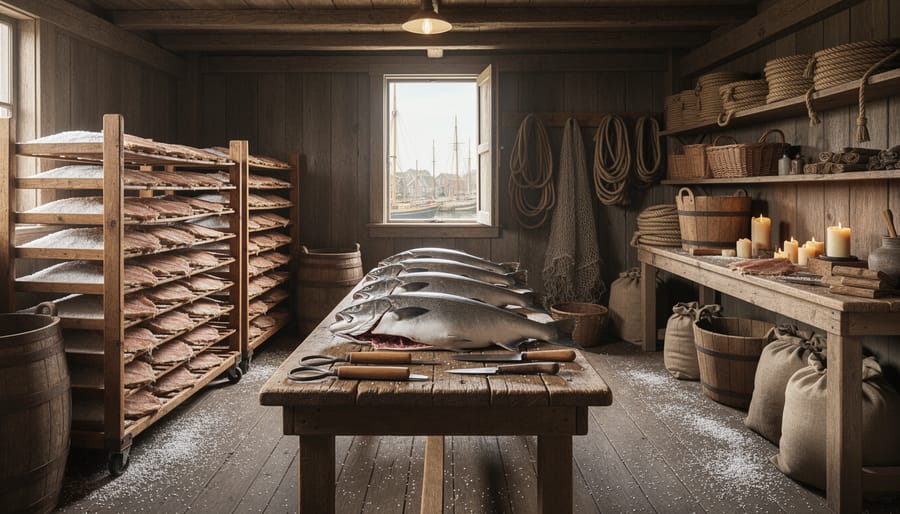
At the Fortress of Louisbourg National Historic Site on Cape Breton Island, the fishing quarter brings 1740s French colonial cod operations vividly to life. Costumed interpreters demonstrate the split-and-salt method that turned fresh cod into the merchantable commodity that funded this military stronghold. The reconstructed fishing stages, flakes (drying racks), and storage sheds occupy the waterfront just as they did when Louisbourg’s fishery employed hundreds of workers each season.
Watch historical interpreters gut and butterfly cod using period techniques, then layer the split fish with Portuguese salt in barrels bound for European markets. The fishing rooms smell of brine and woodsmoke, authentically recreating the sensory reality of this labour. Interpreters explain how Louisbourg’s location near rich offshore banks made it France’s most valuable North American possession, worth more than all of New France’s fur trade combined.
The site operates mid-May through October. Unlike museum displays, this living history format lets you ask working “fishermen” about daily catches, preservation challenges, and the economic networks that connected this remote fortress to Caribbean sugar plantations and Mediterranean ports. Allocate three hours to fully explore both the fishing operations and the broader fortress context.
7. Historic Fishing Villages of Lake Winnipeg, Manitoba
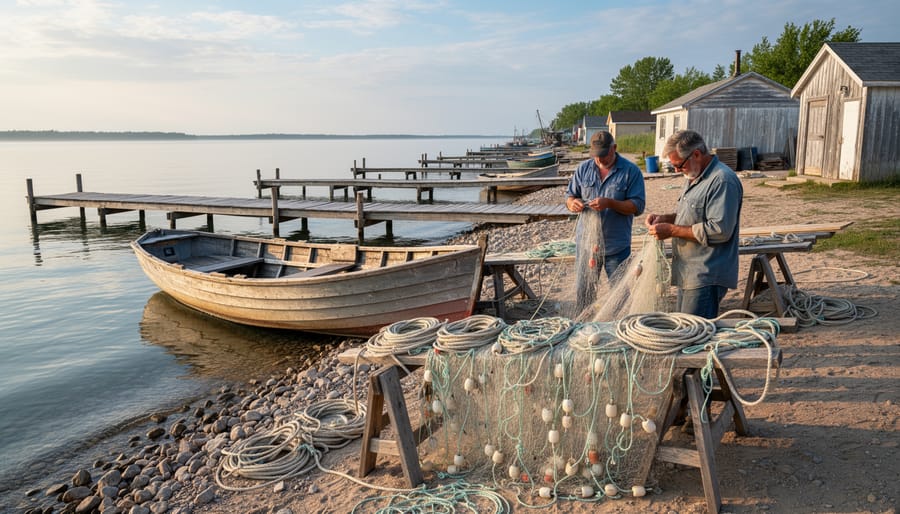
Lake Winnipeg’s shoreline communities preserve a distinctive inland fishing heritage that contrasts sharply with Canada’s better-known coastal traditions. The lake supported major commercial fisheries from the 1880s through the mid-20th century, drawing Icelandic immigrants to settlements like Gimli and Hecla Island, where they established pickerel and whitefish operations that shaped Manitoba’s economy.
Gimli’s harbour district retains working fish sheds and the New Iceland Heritage Museum, which documents how fishing sustained the largest Icelandic settlement outside Iceland. Original fishing stations, complete with ice houses and processing facilities, demonstrate the challenges of year-round operations in a lake that freezes solid for months. The museum’s collection includes traditional gill nets, wooden fish boxes, and photographs of winter fishing through the ice.
Hecla Island offers a more remote experience at the Hecla Village site, where restored fishermen’s homes and boat-building shops sit along the original harbour. First Nations communities around the lake, including those at Berens River and Bloodvein, maintain living fishing traditions predating European contact by millennia. These sites require respectful advance contact, as many remain working communities where fishing continues as both livelihood and cultural practice rather than museum display.
8. Village Historique Acadien Fishing Quarter, New Brunswick
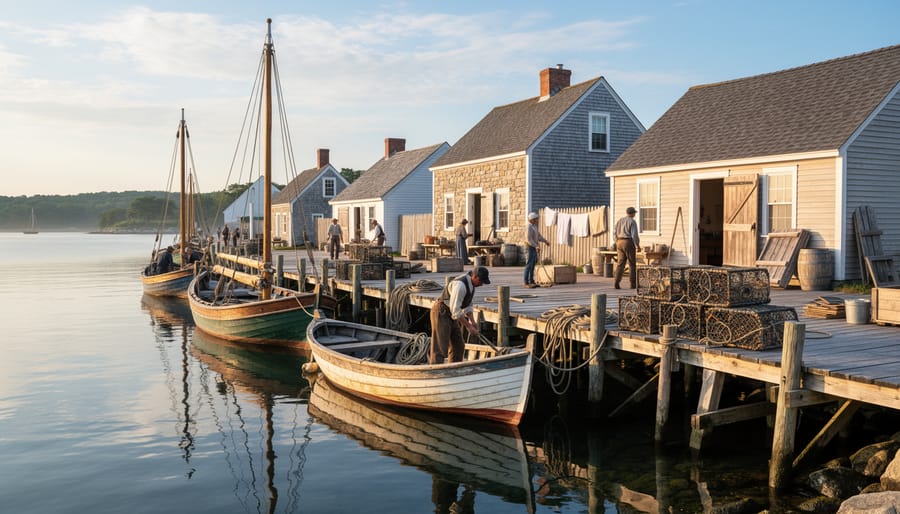
The Village Historique Acadien’s fishing quarter transports visitors to 1870s coastal Acadia, where costumed interpreters demonstrate the daily rhythms of Maritime fishing families who rebuilt their communities after the Deportation. Unlike other heritage sites that preserve original structures, this living museum recreates an entire functioning fishing settlement along the banks of the Rivière-du-Nord.
Watch skilled artisans construct traditional Acadian flatboats using techniques passed down through generations, their distinctive shallow-draft design perfect for navigating tidal estuaries. The fish-drying yards show how families processed their catch using salt and wind rather than the cod flakes common in Newfoundland, a method reflecting Acadian resourcefulness with limited materials. Inside the fisherman’s cottage, interpreters explain how entire families participated in the fishery: men at sea, women managing shore operations, and children mending nets after school.
The site captures uniquely Acadian elements often overlooked in broader Canadian fishing narratives. You’ll see how French-speaking Catholics navigated British colonial fishing regulations, maintained ties to Quebec markets despite political pressures, and integrated farming with fishing in ways that differed from their English-speaking neighbours. Summer demonstrations include net-making, barrel coopering for salting fish, and traditional Acadian songs that fishermen sang while hauling lines.
Practical Information for Visiting
Most historic fishing sites in Canada welcome visitors from May through October, though exact opening periods vary by location and climate zone. Remote outport stations like Battle Harbour typically operate shortened seasons (mid-June to late September), while urban waterfront sites such as Steveston and Lunenburg remain accessible year-round with reduced winter hours. Coastal locations on the Atlantic and Pacific may experience weather-related closures during shoulder months, so confirm operating dates before traveling.
Getting to these sites requires advance planning, especially for island locations. Battle Harbour and several Newfoundland outports need scheduled boat service, while sites like Cannery Row in Prince Rupert connect to BC Ferries routes. Urban heritage areas offer straightforward access via major highways and regional airports, but remote stations may involve gravel roads or small-craft vessels. Visitors to northern sites should book accommodation well ahead, as options near historic fishing stations are limited.
| Site | Best Season | Admission | Access Notes |
|---|---|---|---|
| Lunenburg Fisheries Museum | May-October | $12-15 | Wheelchair accessible, roadside parking |
| Gulf of Georgia Cannery | Year-round | $10-12 | Accessible, 30 min from Vancouver |
| Battle Harbour | June-September | $20 (tour incl.) | Ferry required, limited mobility access |
| Fortress of Louisbourg Fisheries | June-October | $18-20 | Partial accessibility, costumed interpreters |
| Village Historique Acadien | June-September | $22-25 | Wheelchair accessible paths, gravel areas |
Admission costs at most national historic sites range from $10 to $25 per adult, with Parks Canada Discovery Pass holders receiving free entry to federal properties like the Gulf of Georgia Cannery. Community museums often charge lower fees ($5-12), while living history sites with costumed interpreters command premium pricing. Children under 12 typically enter free or at reduced rates.
Accessibility features vary considerably. Urban waterfront museums generally provide ramps, accessible washrooms, and level viewing areas. Restored outport stations and working wharves present challenges: wooden boardwalks, uneven cobblestones, and historic buildings with narrow doorways limit mobility options. Contact individual sites for detailed accessibility information before visiting.
Local Tips for the Best Experience
Plan your visits during shoulder seasons (late May or early September) when sites are fully operational but crowds are lighter, allowing more meaningful conversations with interpreters and fishers. Heritage fishing festivals like Lunenburg’s Fisheries Festival (August) and Steveston’s Salmon Festival (Canada Day weekend) offer exceptional access to traditional boat races, fish processing demonstrations, and cultural performances that bring history to life.
At working waterfronts like Steveston and Prince Rupert, arrive early morning (6-8am) to watch fishing boats return with their catch and witness auction activity at fish markets. Many commercial fishers welcome respectful questions during slower afternoon hours, offering insights no museum placard can match. The rhythm of tides dictates much of the experience at sites like Battle Harbour, where low tide reveals fish flakes and processing areas otherwise hidden.
Consider clustering visits regionally rather than cherry-picking single sites across vast distances. The Atlantic Canada heritage circuit (Lunenburg, Battle Harbour, Twillingate, and Fortress of Louisbourg) works well as a 7-10 day driving route. Similarly, BC’s coastal fishing heritage pairs naturally with broader island traditions exploration in Steveston, Gulf Islands communities, and northern cannery sites.
Connect with site staff about behind-the-scenes opportunities. Many locations offer special access to archives, boat sheds, or restoration workshops if you express genuine interest and visit during quieter periods. Local historical societies often maintain relationships with retired fishers willing to share oral histories, particularly in smaller outport communities where fishing heritage remains living memory rather than distant past.
Frequently Asked Questions
Can you go out on fishing boats at historic sites?
Many sites offer boat tours or demonstrations on traditional vessels, though actual fishing opportunities vary by location and season. Working heritage vessels at places like Lunenburg and Steveston occasionally take visitors aboard for educational experiences.
Are historic fishing sites open year-round?
Most coastal sites operate seasonally from May through October, aligning with historical fishing seasons and weather conditions. Indoor museums like the Fisheries Museum of the Atlantic maintain year-round hours, though some waterfront exhibits close during winter months.
What should I wear when visiting fishing heritage sites?
Dress in layers and bring waterproof outerwear, as coastal weather changes quickly. Comfortable walking shoes with good grip work best on wharves, and sun protection matters even on overcast days near the water.
How can I support fishing heritage preservation efforts?
Consider making donations to site-specific foundations, purchasing from museum shops, or volunteering with local heritage groups. Many communities also welcome participation in annual fish festivals and boat-building workshops that fund ongoing restoration work.
Before planning your visit, you can find nearby history to map out a multi-site heritage tour that connects fishing traditions across different regions. Sites often collaborate on regional passes and combined admission options, particularly along the Atlantic coast where fishing villages cluster within short distances of each other.
