
These collaborative networks function as vital bridges between individual site managers and broader heritage preservation goals, offering members access to specialized knowledge, digitized archival materials, conservation resources, and coordinated advocacy that would be difficult to achieve in isolation. For anyone responsible for maintaining one of the historical places near you joining or forming such a group means tapping into shared solutions for common challenges, from navigating heritage designation processes to managing visitor engagement in 2026’s increasingly digital landscape.
The power of these groups lies in their ability to transform scattered individual efforts into coordinated action. A site manager struggling with moisture damage in a century-old timber structure can consult colleagues who’ve faced identical issues. A small museum seeking grant funding discovers templates and success stories from similar institutions. Indigenous heritage sites gain platforms to ensure their narratives are told with accuracy and respect, not through colonial interpretations.
Digital platforms have fundamentally changed how these groups operate. What once required quarterly in-person meetings now happens through shared databases, virtual consultations, and collaborative project management tools that connect a lighthouse keeper in Newfoundland with an interpretive planner in British Columbia. The result is a living network where Canada’s heritage knowledge circulates freely, strengthening every site it touches.
What Is a Historic Resources Group?
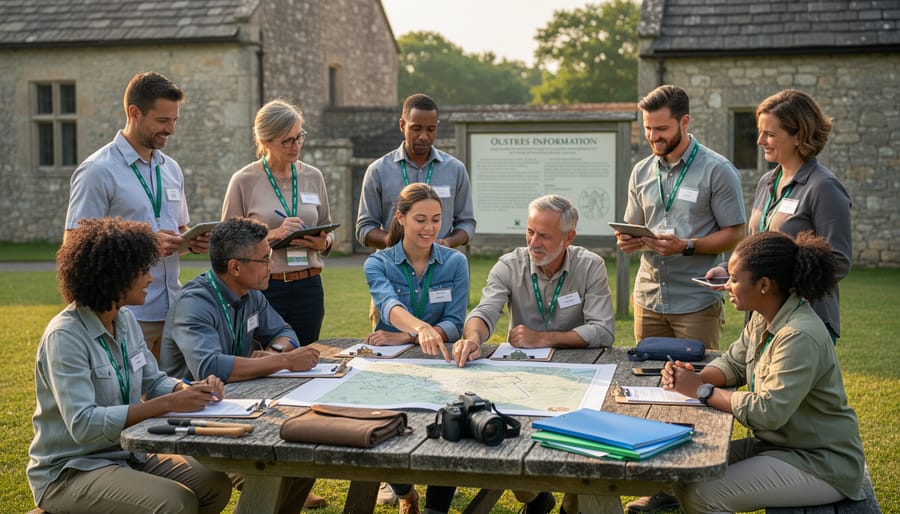
A historic resources group is a collaborative network that brings together heritage professionals, site managers, volunteers, community historians, and preservation organizations around a shared mission: protecting and promoting historical sites. Unlike the isolated work of an individual site manager, these groups create structured opportunities for multiple stakeholders to pool knowledge, coordinate efforts, and tackle preservation challenges collectively. In Canada, where over 600 historic sites span vast geographic distances and represent diverse cultural narratives, from Indigenous heritage to colonial settlements to industrial landmarks, these collaborative networks have become essential infrastructure for effective stewardship.
The composition of these groups varies by region and focus, but most include a mix of professional expertise and grassroots passion. You’ll find museum directors working alongside volunteer genealogists, archaeologists partnering with Indigenous knowledge keepers, and municipal heritage planners collaborating with local historical societies. Some groups form around geographic proximity, all the sites within a province or heritage corridor, while others organize around thematic connections, such as military history, architectural conservation, or Indigenous cultural sites.
Typical activities reflect both practical needs and strategic goals. Groups might coordinate joint training workshops on conservation techniques, develop shared marketing campaigns to boost regional heritage tourism, or establish emergency response protocols for sites threatened by natural disasters. They organize site visits where members learn from each other’s successes and challenges, create shared databases of conservation suppliers and grant opportunities, and present unified positions to government bodies on heritage policy matters.
What fundamentally distinguishes these groups from individual site management is the shift from independence to interdependence. A single site manager makes decisions within their institutional constraints and budget. A historic resources group creates a support system where members contribute different strengths, one site’s expertise in digital engagement, another’s conservation lab access, a third’s relationships with Indigenous communities, building collective capacity that no single site could achieve alone.
The Essential Functions of Historic Resources Groups
Knowledge Sharing and Professional Development
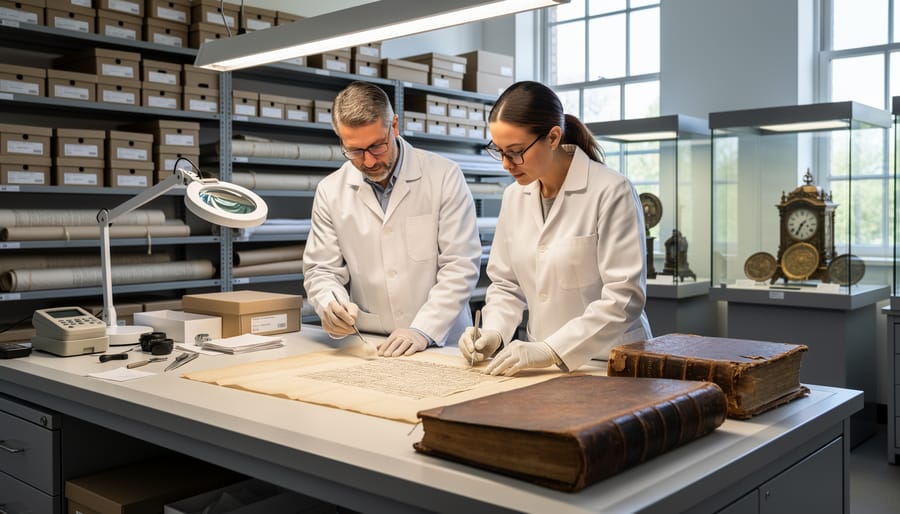
Historic resources groups create structured channels for site managers to exchange conservation techniques and management insights that might otherwise remain siloed within individual institutions. These networks host quarterly workshops where professionals demonstrate specific preservation methods, from timber frame stabilization to archival digitization workflows, allowing managers of smaller sites to access expertise typically available only to larger museums.
Regional meet-ups enable direct comparison of visitor engagement strategies. A manager who doubled school tour bookings through curriculum-aligned programming shares worksheets and lesson frameworks; another who solved chronic moisture issues in a stone foundation walks colleagues through the diagnostic process and contractor selection. This peer-to-peer learning carries practical weight because it comes from people facing identical constraints: limited budgets, volunteer staffing, and seasonal operation cycles.
The groups also coordinate mentorship pairings between experienced directors and newly appointed managers navigating their first grant applications or conservation assessments. Monthly video calls and site visits build working relationships that extend beyond formal meetings.
Online platforms maintained by these groups archive case studies, technical reports, and workshop recordings, creating searchable knowledge bases. When a site confronts an unfamiliar challenge, say, managing increased visitation after media coverage, managers search past discussions rather than starting from scratch, accelerating problem-solving while reducing costly trial-and-error.
Advocacy and Policy Influence
When a single historic site needs help, its voice can get lost in the noise of competing priorities. But when a historic resources group speaks, policy-makers listen. These collective networks transform isolated concerns into coordinated advocacy that shapes heritage legislation, secures funding, and protects sites from development threats.
Historic resources groups regularly brief provincial heritage committees, submit formal responses to proposed legislation, and present unified positions on issues affecting multiple sites. A group representing twenty pioneer museums carries more weight in budget discussions than any individual curator could. They can commission joint impact studies, compile data across regions, and demonstrate patterns that single-site anecdotes cannot establish.
Successful groups maintain relationships with elected officials, heritage trusts, and government departments. They anticipate policy changes before they arrive, positioning their members to adapt rather than react. When new environmental regulations threaten traditional building materials, when municipal zoning shifts endanger site boundaries, or when federal funding criteria change, organized groups negotiate exceptions and transitions that individual sites lack the leverage to secure.
The advocacy extends beyond government. Groups pressure tourism boards for equitable promotion, negotiate bulk insurance arrangements, and influence professional standards that affect hiring and accreditation across the sector.
Resource Pooling and Collaborative Problem-Solving
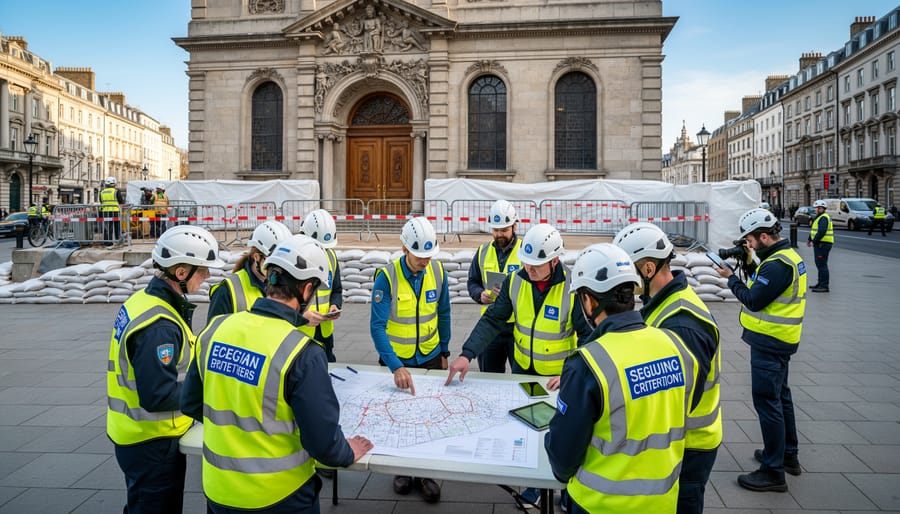
Resource pooling transforms theoretical collaboration into practical impact. When Ontario’s Niagara region historic sites faced structural assessments in 2025, five smaller properties split the cost of hiring a heritage engineer, reducing individual expenses by 60% while ensuring professional-grade evaluations. This shared-cost model extends to specialized equipment: a museum-quality dehumidifier or thermal imaging camera might sit idle eleven months at a single site, but circulating through a group serves multiple properties affordably.
Expertise sharing proves equally valuable. A site manager experienced in grant writing coaches newcomers through their first applications, while a collections specialist trains volunteers across three properties in proper artifact handling. When a sudden roof leak threatened archival materials at a Saskatchewan homestead in early 2026, the local historic resources group mobilized within hours, one member supplied emergency storage, another provided conservation-grade packaging, and a third connected the site with a restoration contractor who had helped similar properties.
Visitor engagement challenges benefit from collective brainstorming. Manitoba sites struggling with winter attendance developed a coordinated “Heritage Passport” program, sharing marketing costs and cross-promoting visits. Conservation emergencies highlight the network’s strength: when wildfires approached British Columbia heritage sites, established communication channels enabled rapid coordination of evacuation protocols and artifact protection, drawing on lessons learned across the group rather than each site improvising alone.
How Resource Platforms Support Historic Resources Groups
Digital platforms designed for heritage professionals have transformed how historic resources groups operate, turning geographic barriers into opportunities for connection. These specialized tools address the practical realities of collaboration, bringing together site managers from Atlantic fishing villages to Prairie fur trade posts, from urban historic districts to remote indigenous heritage sites, without requiring costly travel or coordinated schedules.
The networking capabilities within these platforms function as living directories where members can locate peers facing similar challenges. A curator dealing with deteriorating timber structures can quickly find colleagues who’ve tackled identical issues, while education coordinators can share programming that worked exceptionally well with school groups. Beyond static profiles, these systems enable real-time messaging, regional discussion forums, and specialized interest groups that mirror the organic conversations that once happened only at annual conferences.
Event coordination tools eliminate the logistical friction that often derails collaborative initiatives. Groups can schedule virtual conservation workshops, coordinate regional heritage festivals, or organize synchronized programming across multiple sites, activities that strengthen collective identity while serving public audiences. The platform’s calendar integration ensures members receive timely notifications, while built-in registration systems track participation and measure engagement patterns that inform future planning.
| Platform Feature | Group Benefit | Practical Application |
|---|---|---|
| Shared Knowledge Repository | Preserves institutional memory | Conservation case studies, grant applications, visitor survey templates |
| Interactive Mapping | Visualizes network reach | Identify collaboration gaps, plan regional initiatives, showcase collective impact |
| Resource Library | Eliminates duplication of effort | Educational materials, interpretive scripts, maintenance protocols |
| Analytics Dashboard | Demonstrates collective value | Aggregate visitor numbers, economic impact data for funding advocacy |
National visibility represents perhaps the platform’s most significant contribution to group effectiveness. When historic resources groups coordinate historical virtual field trips or joint exhibitions through these systems, they reach audiences far beyond their individual capacity. A coalition showcasing Indigenous treaty sites or railway heritage gains prominence that no single location could achieve alone, attracting media attention, educational partnerships, and funding opportunities that flow from demonstrated relevance to broader Canadian narratives.
The knowledge repositories embedded in these platforms function as living archives where groups document successful approaches, failed experiments, and evolving best practices. Unlike email chains that vanish when staff transition or hard drives that crash, platform-hosted resources remain accessible to current and future members, building institutional knowledge that compounds over time rather than restarting with each leadership change.
Building and Sustaining Effective Historic Resources Groups
Establishing a Foundation
Starting a historic resources group requires deliberate groundwork that brings the right people together around shared priorities. Begin by mapping your stakeholder landscape, identify not just fellow site managers and heritage professionals in your region, but also community historians, Indigenous knowledge keepers, local historical societies, municipal heritage planners, and engaged volunteers. Cast a wide net initially. Different perspectives strengthen the foundation.
Once you’ve identified potential participants, convene an exploratory meeting to articulate common challenges and aspirations. What conservation issues affect multiple sites? Where do knowledge gaps exist? What advocacy efforts would benefit from a collective voice? Let these discussions surface naturally rather than imposing predetermined objectives. The most sustainable groups emerge from genuinely shared concerns, not top-down mandates.
Early governance decisions shape long-term effectiveness. Establish a simple but clear structure: rotating facilitators prevent burnout and ensure no single institution dominates. Create decision-making processes that give smaller community sites equal weight with larger institutions. Document basic operating principles, meeting frequency, communication channels, resource-sharing protocols, without becoming overly bureaucratic.
Balance formality with flexibility. You need enough structure to maintain accountability and continuity, but rigid hierarchies discourage participation. Many successful groups operate with lightweight coordination, using shared documents and scheduled calls rather than elaborate committees. Start lean, then adjust as your collective work reveals what governance your group actually needs.
Maintaining Momentum and Engagement
Sustaining an active historic resources group requires intentional effort beyond the initial formation phase. Regular communication forms the backbone of engagement, establish a predictable rhythm through monthly newsletters, quarterly video calls, or dedicated discussion forums on resource platforms where members can share updates between formal meetings.
Meaningful projects keep groups energized. Rather than abstract planning sessions, focus on tangible initiatives like coordinating a regional heritage festival, developing shared interpretation standards, or jointly applying for grant funding. Projects with visible outcomes give members concrete reasons to participate and demonstrate the value of collaboration to their boards or funders.
Recognition matters more than many coordinators realize. Publicly acknowledge contributions in group communications, feature member sites in platform spotlights, or create annual awards for innovative conservation work. Simple gestures like thanking someone for sharing a useful technique during meetings build the culture of mutual support that sustains voluntary participation.
Platform tools streamline coordination significantly. Shared calendars prevent scheduling conflicts for regional events, document repositories create institutional memory accessible to new members, and project management features help track collaborative initiatives without endless email chains. These digital infrastructures reduce the friction that causes participation to wane over time.
Navigating Common Challenges
Geographic distance poses a real challenge when coordinating across provinces, member sites scattered from British Columbia to Newfoundland rarely meet in person. Video conferencing and shared digital workspaces bridge this gap, though they demand reliable internet access that some rural sites still lack.
Resource disparities create tension when well-funded national historic sites collaborate with volunteer-run local museums operating on shoestring budgets. The strongest groups acknowledge these differences openly, structuring projects so smaller sites contribute knowledge rather than money, and larger institutions share technical resources without creating dependency. Competing priorities surface constantly, a superintendent juggling visitor safety, budget cuts, and infrastructure repairs can’t always attend working group calls. Groups sustain momentum by keeping asks realistic, rotating leadership responsibilities, and celebrating small wins that remind everyone why the collaboration matters.
Professional expertise varies widely too. A formally trained conservator and a passionate amateur historian bring different strengths; effective groups treat both as valuable, creating mentorship pairings and establishing clear protocols for technical decisions while respecting experiential knowledge. When disagreements arise over methodology or priorities, returning to the shared mission, preserving heritage for future generations, usually realigns the group.
Success Stories: Historic Resources Groups in Action
The Maritime Heritage Network demonstrated remarkable heritage association success when five lighthouse stations across Nova Scotia and New Brunswick pooled resources to address chronic structural deterioration threatening their historic towers. Working together, site managers secured matching federal grants they couldn’t have obtained individually, then coordinated a shared team of heritage masonry specialists who moved between sites over eighteen months. The collaborative approach reduced restoration costs by nearly 40% while establishing consistent conservation standards. Today, visitors touring any of these lighthouses encounter interpretive programming that connects the sites as a unified maritime story rather than isolated attractions.
In Northern Ontario, the Fur Trade Heritage Collective tackled a challenge familiar to rural historical sites: limited budgets for educational programming. Seven sites representing different aspects of the fur trade era, from trading posts to Indigenous gathering places, created a rotating exhibit system and shared Indigenous cultural educators. Each site now hosts quarterly programs featuring traditional skills demonstrations, storytelling sessions, and artifact handling that would have been financially impossible alone. Annual visitation across all seven sites increased 28% within two years, with families deliberately planning routes to experience multiple locations.
The Quebec fortifications group responded to flood damage in 2023 by establishing an emergency conservation network that became a model for disaster preparedness. When spring flooding threatened artifact collections at three riverside forts, members provided temporary climate-controlled storage, shared conservation expertise, and coordinated volunteer teams for rapid collection relocation. This crisis response evolved into a formal mutual aid agreement covering fire, flooding, and structural emergencies, complete with shared emergency supplies and cross-trained staff.
Drawing on Newfoundland and Labrador history coastal outport communities formed the Atlantic Heritage Alliance to address shared challenges of remoteness and seasonal accessibility. Their joint digital archive project documented disappearing fishing practices and settlement patterns, creating resources that enriched interpretation at twelve participating sites. The collaborative oral history initiative recorded over 200 elder interviews, providing authentic voices that transformed static exhibits into living cultural narratives. Visitors now encounter deeply personal stories connecting individual sites to broader regional heritage patterns.
Common Questions About Historic Resources Groups
How much time does participating in a historic resources group typically require?
Most groups hold quarterly meetings (2-3 hours each) and coordinate occasional collaborative projects, so expect roughly 4-8 hours per month. Many groups offer flexible participation levels, letting site managers contribute more during quieter seasons and scale back during peak visitor periods.
Are there formal membership criteria or costs to join?
Requirements vary widely, some groups welcome anyone interested in heritage preservation, while others focus on professional site managers or specific geographic regions. Membership fees are rare; most groups operate on voluntary contributions or share costs only for specific joint projects.
How do these groups relate to established heritage organizations like provincial historical societies?
Historic resources groups typically complement rather than compete with formal heritage bodies. While official organizations handle accreditation and policy, collaborative groups focus on practical peer support and resource sharing, often maintaining partnerships with provincial and national heritage networks.
Can small sites with limited budgets still contribute meaningfully?
Absolutely. Groups thrive on diverse perspectives, and smaller sites often bring valuable local knowledge, innovative visitor engagement approaches, and specialized expertise in areas like oral history or artifact conservation that benefit everyone.
Site managers frequently wonder whether joining a group means adopting uniform operating procedures. In practice, successful collaborations respect each site’s unique character and management approach. A historic resources group serving coastal historic fishing sites for instance, might share conservation techniques for maritime artifacts while each location maintains its distinct interpretation and programming tailored to local communities.
Questions about liability and governance structures arise naturally when considering collaborative work. Most groups operate informally without legal incorporation, establishing simple terms of reference rather than complex bylaws. When groups undertake joint funding applications or conservation projects requiring formal agreements, they typically designate a lead institution to manage administrative requirements while ensuring transparent decision-making among all participants.
Concerns about competition for visitors or funding occasionally surface, particularly among sites in proximity. Experienced groups address this by emphasizing complementary strengths rather than duplication, developing regional heritage trails that increase overall visitation, and pursuing collaborative grants that wouldn’t be available to individual sites. The shared visibility and enhanced visitor experience ultimately benefit the entire network more than isolated marketing efforts.
Canada’s heritage landscape, from coastal fortifications to prairie homesteads, from Indigenous ceremonial grounds to industrial monuments, gains strength through shared stewardship. Historic resources groups transform isolated sites into connected nodes of collective knowledge, where a conservation challenge solved in Nova Scotia informs practice in British Columbia, and a volunteer engagement strategy from Ontario inspires communities across the territories.
For site managers navigating tight budgets, evolving visitor expectations, and complex conservation demands, these collaborative networks offer practical support that no single institution can match. They provide the professional community, pooled expertise, and advocacy voice that turns heritage preservation from a solitary struggle into a shared mission.
Resource platforms designed for historic sites management bridge the geographic distances that once limited collaboration. They connect the 600+ sites shaping Canada’s heritage story, not as competitors for attention and funding, but as partners in a larger preservation effort that honours the country’s full cultural complexity.
Whether you’re stewarding a nationally recognized landmark or a locally significant building, your work gains impact through connection. Join existing groups, initiate regional networks, or simply reach out to fellow managers facing similar challenges. Every collaboration strengthens the fabric of Canadian heritage, ensuring these irreplaceable sites endure for generations who’ll draw meaning, identity, and inspiration from them.
