
The Cape Fear Farm Heritage Association preserves a living portrait of early 20th-century Newfoundland outport life on the remote Cape Race peninsula, where generations of farming and fishing families forged communities against the North Atlantic wind. Located near one of the island’s most historically significant lighthouses, the Association operates a collection of restored heritage buildings and farmsteads that invite visitors to step directly into the rhythms of rural life as it existed before the era of resettlement reshaped coastal Newfoundland.
What sets this heritage site apart is its commitment to tangible, sensory experience rather than static museum display. Fields are still worked using period-appropriate methods. Heritage breed livestock graze stone-walled pastures. Traditional crafts from root cellar construction to wool dyeing continue in the hands of skilled interpreters who share knowledge passed down through family lines. The Association’s crown jewel is Cape Race Heritage Days, an annual celebration that transforms the site into a bustling village green where visitors can participate in butter churning, participate in line dancing to accordion music, and taste salt fish cooked over wood stoves in restored kitchens.
The Cape Race peninsula itself carries deep historical weight. This windswept finger of land received the Titanic’s distress signals in 1912 and served as a critical navigation point for transatlantic shipping for centuries. The farm heritage that the Association protects tells a parallel story of resilience, one written in cleared fields, hand-built walls, and the everyday ingenuity required to thrive in one of North America’s most challenging climates.
A Living Museum on Newfoundland’s Edge
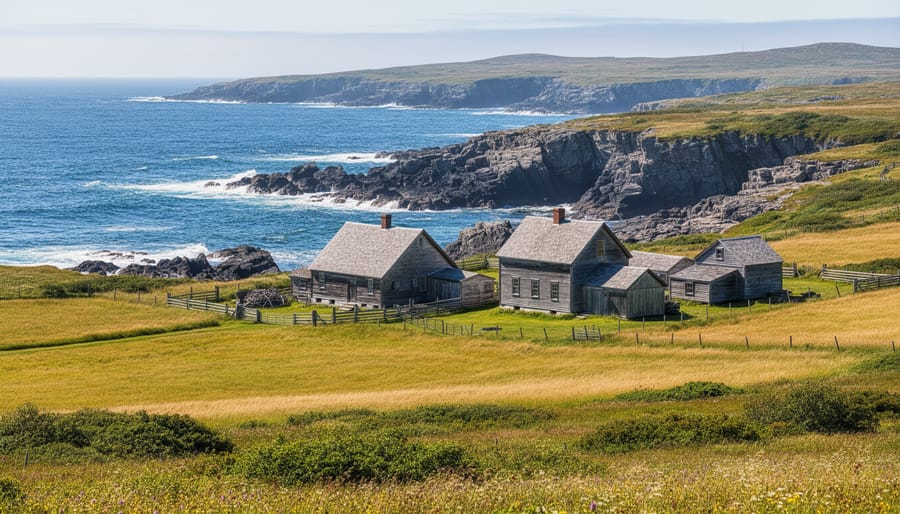
The Cape Fear Farm Heritage Association sits where the North Atlantic wind meets stubborn tradition, on the windswept southeastern reaches of Newfoundland’s Avalon Peninsula. This is Cape Race country, where fog rolls in thick and sudden, where centuries of mariners marked the last sight of land before crossing to Europe, and where farming families coaxed life from thin soil and brutal weather through sheer determination.
The Association didn’t begin with grand plans or government funding. It grew from kitchen table conversations in the late 1990s, when a handful of elderly farmers realized their children were leaving for jobs in St. John’s and Alberta, taking with them the last generation of knowledge about how their grandparents had survived here. Traditional skills were vanishing faster than the cod stocks, how to winter sheep in makeshift shelters, when to plant potatoes by moon phases, which root vegetables could withstand a September frost.
Preserving these practices isn’t nostalgia; it’s keeping alive the ingenuity that let people thrive where survival seemed impossible.
What started as informal gatherings to document old farming methods evolved into a registered non-profit by 2003. The founders secured a 30-acre parcel that had been worked since the 1860s, complete with a weathered barn, a traditional root cellar carved into a hillside, and stone walls hand-built by settlers who knew every rock by name. The mission crystallized quickly: preserve Newfoundland farming traditions through active demonstration, not static museum displays.
Today, the site operates as a working heritage farm where visitors see techniques that kept communities fed through Depression winters and wartime shortages. The landscape itself tells the story, windbreak trees planted in precise rows, fields divided by the logic of drainage and sun exposure, buildings positioned to shelter livestock from nor’easters. This is living history, rooted in a place where the land shaped the people as much as they shaped it.
What Makes Cape Fear Farms Different
Heritage Breeds and Hardy Crops
The Association’s fields and barns shelter breeds that would have vanished without deliberate preservation. Newfoundland Ponies, once the backbone of island farm work, graze the coastal pastures, stocky animals with thick winter coats that evolved through centuries of exposure to Atlantic winds. These ponies, standing barely fourteen hands high, could pull loads through bog and forest while surviving on sparse winter forage that would starve mainland horses.
In the livestock pens, visitors encounter sheep breeds adapted to the island’s wet climate. The Icelandic sheep maintained here represent the original Viking stock brought across the North Atlantic, their dual-coat wool system shedding rain while providing exceptional insulation. These animals thrive where others struggle, browsing rough vegetation and birthing lambs in harsh spring weather that tests modern breeds.
The crop fields tell equally compelling stories of adaptation. Purple-topped turnips, once the primary winter vegetable, grow large in Newfoundland’s cool summers and store for months in traditional root cellars. Oats and hay varieties selected over generations for short growing seasons still produce reliable yields when mainland cultivars fail.
The Association doesn’t just maintain these breeds and varieties as museum pieces. They demonstrate why settlers chose them, watching Newfoundland Ponies work in harness or tasting bread made from heritage grain varieties reveals the practical wisdom encoded in these living artifacts of agricultural history.
Traditional Farming Techniques
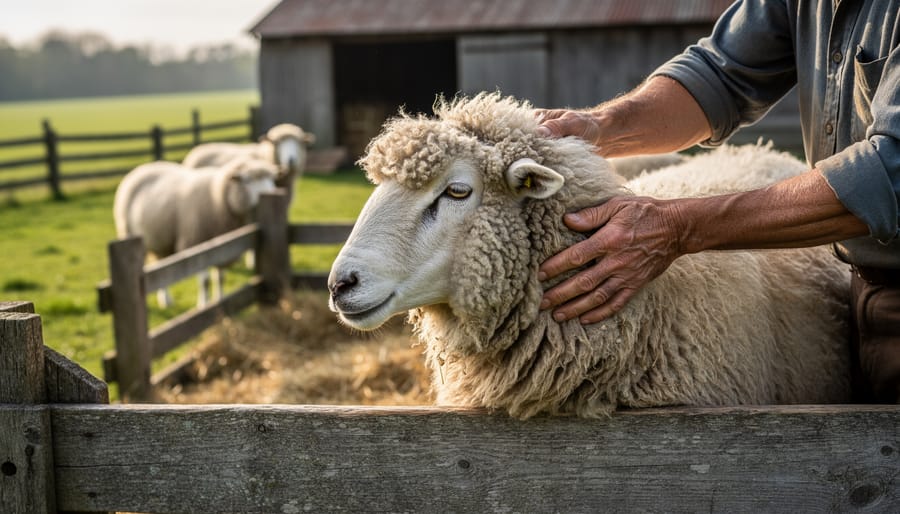
Step into the Association’s working farmstead and you’ll see techniques that vanished from most modern operations decades ago. Volunteers demonstrate hand-shearing sheep using traditional blade shears, a slower process than electric clippers, but one that reveals the rhythm and patience farming once demanded. Watch as they work around the animal’s contours, explaining how generations learned to “read” each fleece.
The root cellar, dug deep into Cape Fear’s rocky soil, stays naturally cool year-round. Guides show how root vegetables were layered in sand, how turnips outlasted winter storms, and why certain storage angles prevented frost damage. You’ll see hay being pitched with wooden forks, grain threshed by hand, and butter churned in ceramic crocks.
During peak season, interpreters fire up the wood-burning cook stove, baking bread from heritage wheat varieties using sourdough starters passed down through families. They don’t just perform these tasks, they explain the “why” behind each motion, the failures early settlers faced, and the clever adaptations that made survival possible on this unforgiving coast.
Cape Race Heritage Days: The Annual Celebration
Hands-On Heritage Experiences
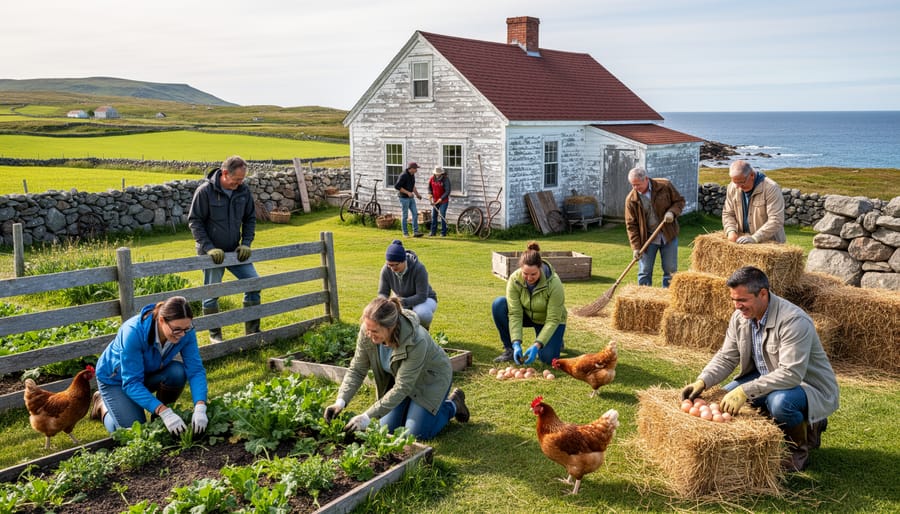
During Cape Race Heritage Days, the Association transforms from museum into workshop, inviting visitors to roll up their sleeves and step into the rhythms of island farm life. You won’t just watch demonstrations, you’ll grip shearing tools yourself, feeling the resistance of sheep’s wool as experienced hands guide your movements. The scent of lanolin lingers on your fingers long after you’ve finished.
At craft stations scattered across the grounds, local artisans teach skills that once filled winter evenings: braiding fishing nets, hooking rug patterns, whittling wooden tools. Children crowd around butter-churning demonstrations, taking turns at the handle until cream thickens into golden butter they’ll taste on fresh-baked bread minutes later.
The outdoor kitchen becomes a gathering point where volunteers show how root vegetables were preserved through harsh winters. You might find yourself peeling turnips for salt-fish dinner, learning why certain cuts and ratios mattered when supplies ran low between harvests. Heritage grain grinding stations let you work stone mills, transforming wheat into flour, dusty, physical work that redefines what “from scratch” truly meant.
These aren’t polished performances. Wool sometimes tangles, bread occasionally burns, and that’s precisely the point. You experience the trial-and-error reality of historical self-sufficiency, gaining respect for skills your ancestors mastered out of necessity rather than curiosity.
Stories from the Land
The heartbeat of Heritage Days pulses strongest when the stories begin. Under canvas tents or in the farmhouse parlor, elders and longtime residents share memories that textbooks never captured, how their grandmother predicted storms by watching the sheep, why certain fields were never plowed, what songs kept the rhythm during harvest time.
These aren’t scripted presentations. They’re conversations that spiral organically from one memory to another, from practical wisdom to ghost stories told around winter stoves. A retired fisherman might explain how farm rhythms synchronized with fishing seasons, while his neighbor recalls the traveling threshers who brought news from distant outports. Someone always remembers the Depression years, when Cape Fear farms fed entire communities and barter replaced currency.
The Association records many sessions, understanding that once these voices fade, entire worlds of knowledge disappear. You’ll hear Newfoundland dialects in their full richness, expressions that haven’t appeared in print, and problem-solving methods developed through generations of trial and error.
Young farmers attend specifically for these exchanges, scribbling notes while elders demonstrate weather reading or explain the timing of heritage seed planting. It’s knowledge transfer happening in real time, the kind that can’t be Googled because it exists only in human memory, waiting for someone to ask the right question.
Visiting the Association: Your Heritage Journey
Planning a visit to the Cape Fear Farm Heritage Association rewards those who come prepared for a genuine working heritage site rather than a polished museum. The experience varies dramatically by season, with summer offering gentler weather and easier access, while spring and fall bring working demonstrations tied to lambing, shearing, and harvest cycles. Winter visits present a stark beauty and insight into how islanders endured the harshest months, though some outdoor areas may be less accessible.
Year-round, the site operates as a living farm where preservation work continues daily, meaning visitors witness authentic agricultural rhythms rather than staged performances. Dress for farm conditions: sturdy, weatherproof footwear is essential, layers handle Newfoundland’s changeable weather, and rain gear often proves necessary within hours of sunny skies. The coastal location brings wind and cool temperatures even in summer.
- History buffs: Allow three to four hours to explore buildings, exhibits, and speak with knowledgeable staff about farming heritage
- Families: Arrive early when animals are most active; children especially enjoy hands-on areas and heritage breed encounters
- Photographers: Morning light captures the landscape beautifully; respect working areas and ask permission before photographing people
- Accessibility: Contact ahead regarding mobility needs, as historic farm buildings have limitations and terrain can be uneven
The Association maintains basic visitor facilities including washrooms and a small interpretive center, but this isn’t a place with cafés or gift shops. Bring water and snacks, especially if traveling with children. Staff and volunteers prove remarkably generous with their time and knowledge when visitors show genuine interest, so don’t hesitate to ask questions about techniques, breeds, or island farming history. The most rewarding visits happen when you slow down, observe the details, and let the stories emerge naturally from the landscape and the people who tend it.
Beyond the Farm: Cape Fear’s Cultural Landscape
The Cape Fear Farm Heritage Association doesn’t exist in isolation, it’s woven into a cultural tapestry that spans the entire southeastern tip of the Avalon Peninsula. This windswept corner of Newfoundland has shaped, and been shaped by, generations who balanced farming with fishing, survival with community building.
Just a few kilometers from the farm sites stands the Cape Race Lighthouse, a sentinel that has guided mariners since 1856 through some of the North Atlantic’s most treacherous waters. The lighthouse keeper families and farm families depended on each other here, trading vegetables for fish, sharing labor during harvest or storm emergencies. That relationship between land and sea defines Cape Race’s character. The Association preserves farming traditions, but those traditions developed alongside, and in response to, the maritime economy that sustained these communities.
Scattered across the landscape, you’ll find remnants of outport settlements where farming was never a full-time occupation but a survival necessity. Root cellars dug into hillsides. Stone walls marking old field boundaries. Foundations of homes where families spent winters preserving food they’d grown during brief summers. The Association’s work brings context to these archaeological fragments, showing how people actually lived rather than just where they lived.
Cape Race also holds a unique place in communication history. The Marconi wireless station here received the Titanic’s distress signals in 1912, connecting this remote agricultural outpost to global events. Walking these headlands, you realize the isolation farmers endured wasn’t just geographic, it was temporal, with news and supplies arriving sporadically by sea.
The farm heritage doesn’t compete with these other stories. It completes them, revealing how ordinary people carved out lives in an extraordinary, unforgiving place.
Standing at the edge of Cape Fear, where salt winds have shaped both landscape and lives for centuries, the Cape Fear Farm Heritage Association does more than preserve old ways, it keeps them breathing. Every heritage breed that grazes these coastal pastures, every hand-forged tool displayed in weathered barns, every storyteller who shares memories of seasons past represents a direct link to Newfoundland’s agrarian soul.
This isn’t history locked behind glass. It’s living knowledge passed hand to hand, season to season, visitor to volunteer. When you shear a sheep using century-old techniques or taste bread baked in a traditional outdoor oven, you become part of an unbroken chain stretching back through generations of island farmers who refused to surrender to harsh conditions.
Whether you visit during the vibrant Cape Race Heritage Days or on a quiet autumn afternoon when mist rolls in from the Atlantic, you’ll find something increasingly rare: authenticity. The Association needs more than visitors, though, it needs advocates, volunteers, and supporters who understand that some traditions deserve to survive.
Come for the history. Stay because it matters.
