
Open your smartphone’s map application and search for National Historic Sites, heritage buildings, or local historical societies within a 25-kilometer radius. Toggle on satellite view to spot century-old structures by their distinctive architectural footprints, then cross-reference with municipal heritage registers available through your city’s official website.
The ground beneath your feet holds stories waiting to be discovered. That weathered stone church you drive past each morning might mark the site of your region’s first settlement. The abandoned railway station at the edge of town could have welcomed thousands of immigrants who shaped your community’s character. These aren’t distant attractions requiring elaborate travel plans. They’re the historical places near you, often overlooked precisely because they’re so accessible.
Understanding what qualifies as historically significant transforms ordinary neighborhoods into open-air museums. A site doesn’t need plaques or visitor centers to matter. The 1890s general store converted into a coffee shop, the Indigenous gathering place along the riverbank, the Art Deco theater that survived urban renewal, they all preserve tangible connections to the past. Provincial and territorial registers list thousands of designated properties, but countless undesignated sites carry equal cultural weight.
Historic Places Days 2026 offers the perfect catalyst for this exploration. Taking place each July, the celebration opens normally private heritage buildings and organizes guided experiences at archaeological sites, military fortifications, and pioneer homesteads. This annual event reveals the remarkable density of historical resources most communities possess.
The real discovery happens when you move beyond passive viewing. Photograph architectural details that reveal construction techniques from different eras. Speak with longtime residents who remember when that vacant lot held the town’s first school. Download heritage walking tour apps that overlay historical photographs onto present-day streetscapes.
Why ‘Near Me’ Changes Everything About Historical Exploration
When you search for old historical places near you, you’re doing more than planning a visit, you’re unlocking a fundamentally different way to experience Canada’s past. Distance transforms everything about heritage tourism. The three-hour drive to a famous national site becomes a special occasion requiring planning, packed lunches, and vacation days. That 1867 farmhouse fifteen minutes away? You can explore it on a Tuesday afternoon, return in different seasons, bring visiting friends, or simply satisfy sudden curiosity without the friction of major travel.
This proximity creates depth that distant destinations cannot match. You begin recognizing the landscape that shaped your community’s early settlers. The creek behind the heritage mill is the same one flowing through your neighborhood park. The rail line that built your town’s economy still cuts through downtown, now repurposed but telling the same geographic story. These connections transform abstract history into lived experience, anchoring national narratives in the specific soil beneath your feet.
Local historical sites also invite repeat engagement that builds genuine understanding. First visits capture broad strokes; third visits reveal details, carpenter’s marks on beams, settlement patterns in cemetery plots, architectural evolution between building additions. You overhear other visitors’ questions, attend seasonal programs, notice how interpreters emphasize different themes. This layered discovery simply doesn’t happen with once-in-a-lifetime destinations.
The accessibility factor matters for heritage preservation too. Sites that depend on tourism from distant visitors face volatile attendance and funding. Locally-supported historical places build sustainable communities of repeat visitors, volunteers, and advocates who ensure these sites survive for future generations. Your fifteen-minute drive becomes someone else’s heritage lifeline.
Perhaps most importantly, proximity democratizes historical exploration. Weekend time-travel no longer requires extensive budgets, elaborate planning, or rare opportunities. It simply requires curiosity and a short drive to discover the centuries-old stories waiting in your own backyard.
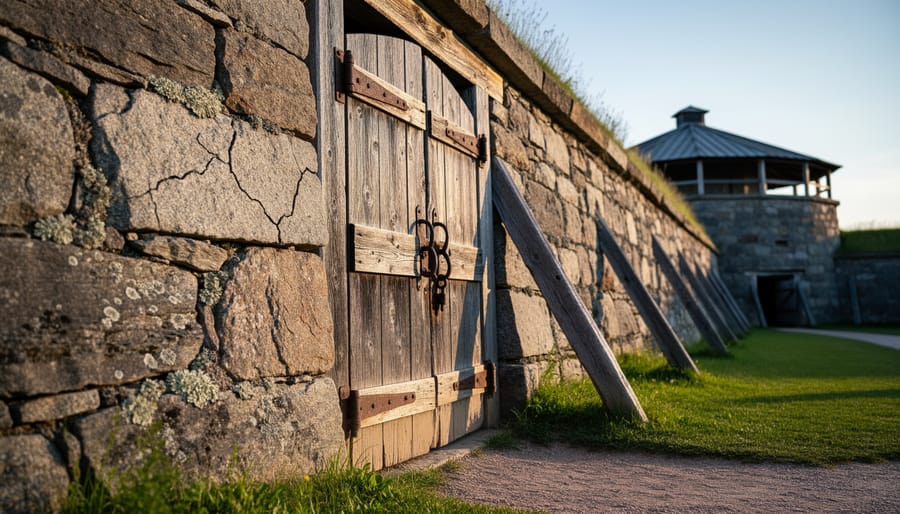
Finding Your Hidden Historical Neighbors
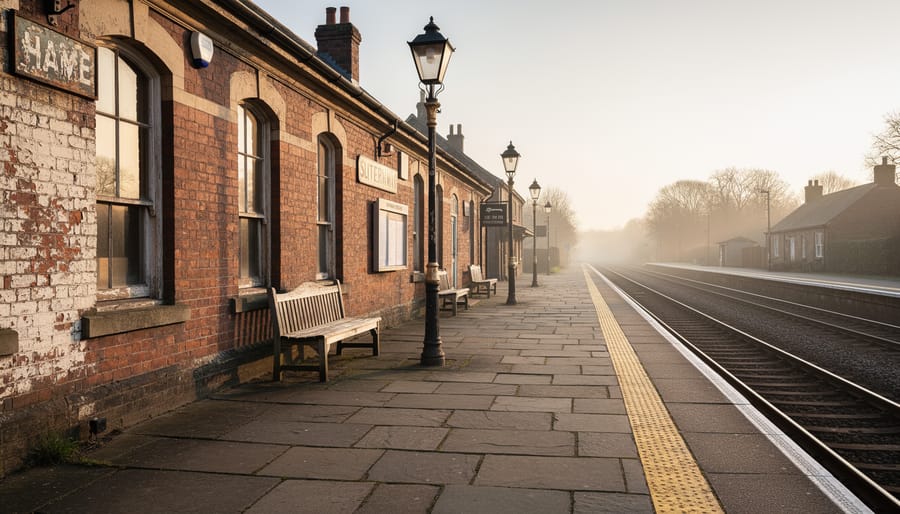
Beyond the Famous: Uncelebrated Sites Worth Your Time
The worn threshold of a nineteenth-century post office, now housing a café. A weathered stone marker in a subdivision park where Métis traders once gathered. These places exist five minutes from your doorstep, yet most heritage tourists bypass them chasing castle-sized attractions hours away.
Early settler cabins tell different stories than grand estates, cramped quarters, ingenious storage solutions carved into log walls, the positioning of a single window explaining how families survived winter isolation. Manitoba’s countryside holds dozens of these structures, some still standing in farm fields, their hand-hewn timbers recording ax marks from 1870s homesteaders.
Indigenous meeting grounds rarely announce themselves with plaques. A riverside clearing, an unusual rock formation, or a grove of trees might mark gathering sites used for centuries before European contact. The Provincial Heritage Register database in British Columbia now includes some of these cultural landscapes, though many remain known primarily through oral tradition and community knowledge.
Abandoned railway stations dot small towns across the Prairies, brick buildings with arched windows and distinctive rooflines that once connected isolated communities to national commerce. Saskatchewan alone preserves over fifty as museums, cafés, or community centers. Their telegraph equipment and freight scales sit exactly where agents left them decades ago.
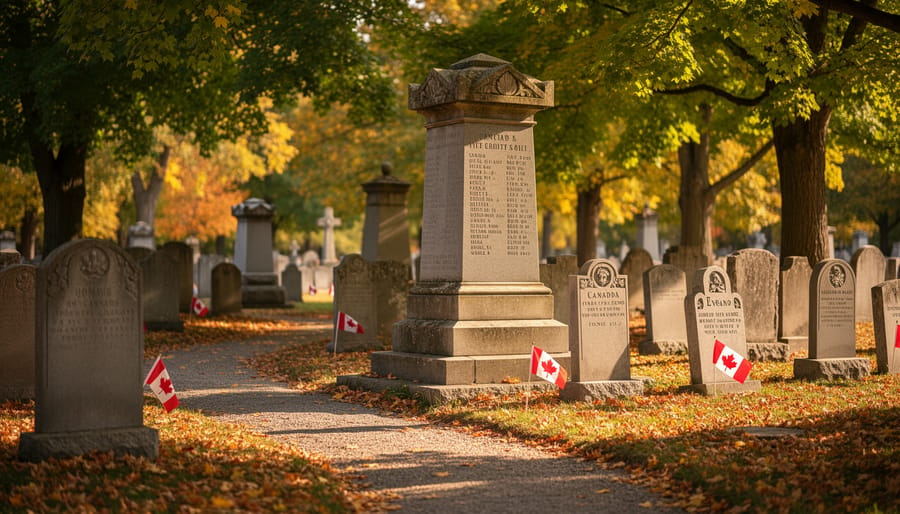
Historic cemeteries function as outdoor archives. Epitaphs record epidemic waves, immigration patterns, and forgotten professions, stone carvers, cordwainers, lamplighters. Military sections tell war stories through birth and death dates that reveal teenage soldiers.
Heritage districts hide in modern neighborhoods. Toronto’s Cabbagetown, Winnipeg’s Exchange District, and Quebec City’s Lower Town embed entire streetscapes of Victorian-era architecture into contemporary urban life. Learning to find historic places like these transforms ordinary walks into architectural time travel, no museum admission required.
What Makes a Place ‘Old’ and Worth Visiting
Age matters, but it’s not everything. A building from the 1920s might hold more cultural weight than a structure twice its age if it witnessed a watershed moment or embodies architectural innovation that shaped how Canadians built their communities. What makes old historical places near me genuinely worth your time comes down to layers of significance that transcend the calendar.
Start with architectural integrity. Does the place retain original features that demonstrate period craftsmanship, hand-hewn timber frames, stone masonry techniques, decorative elements specific to an era? Parks Canada’s criteria for national historic significance evaluate whether a site illustrates important architectural trends or building methods. A perfectly preserved 1880s general store with original shelving and pressed-tin ceiling tells a richer story than a heavily renovated mansion from 1820.
Cultural importance often outweighs pure age. Indigenous meeting grounds used for centuries, sites where treaties were signed, or buildings that served as community anchors during formative periods all carry weight. A modest church that sheltered Underground Railroad freedom seekers holds profound significance a grander building might lack.
Connection to pivotal events transforms ordinary structures into meaningful heritage sites. The farmhouse where confederation discussions happened over dinner, the factory floor where a labour movement began, the courthouse where a landmark legal decision unfolded, these places anchor abstract history to physical spaces you can walk through.
Different periods tell distinct Canadian stories through types of heritage sites that dot our landscape:
- Colonial Era (pre-1867)
- Fortifications, fur trading posts, and mission settlements reveal how European powers and Indigenous nations shaped early Canada through commerce, conflict, and cultural exchange.
- Confederation Period (1867-1900)
- Railway stations, government buildings, and civic architecture embody nation-building aspirations and the infrastructure that stitched provinces into a country.
- Industrial Age (1880s-1940s)
- Mills, factories, mining sites, and worker housing document resource extraction economies and labour conditions that built modern Canada’s prosperity and struggles.
- War Era (1914-1945)
- Training camps, munitions plants, memorial halls, and military hospitals preserve stories of sacrifice, home-front mobilization, and communities transformed by global conflicts.
The best historical places layer multiple significance types. That weathered train station might showcase Victorian-era architecture while marking where immigrant families first arrived and local soldiers departed for war, three stories in one building, all waiting for you to discover.
Your Virtual Journey Starts Here: Regional Historical Treasures
Eastern Heritage: Where European Settlement Took Root
# Response
Stand at the ramparts of Louisbourg Fortress on Cape Breton Island, and you’re touching stones laid by French soldiers in 1720, this isn’t reconstruction fantasy, it’s Canada’s largest historical reconstruction built on authentic foundations. Eastern Canada preserves Europe’s first permanent foothold on this continent, where cobblestones remember three centuries of boots, and harbour walls still whisper in French.
Quebec City’s Old Town delivers layered time travel within walking blocks. The stone houses lining Rue du Petit-Champlain date to the 1600s, their foundations predating most American cities. Climb to the Plains of Abraham where a single 1759 battle redirected a continent’s future, then descend to Place Royale where Champlain established New France in 1608. TheUrsulineConvent’s archives hold documents penned when Shakespeare still lived.
The Acadian story survives in New Brunswick’s humble strength, wooden churches at Grand-Pré where deportation memorials stand, weathered fishing wharves at Caraquet, and the Village Historique Acadien near Caraquet where 40 heritage buildings preserve French settler life from 1770 to 1890. These aren’t grand monuments; they’re farmhouses and forges that weathered expulsion and return.
Newfoundland’s Signal Hill looks across the same Atlantic view that John Cabot saw in 1497. L’Anse aux Meadows pushes Canada’s European history back to Norse landings around 1000 CE, the only confirmed Viking settlement in North America.
Eastern heritage means meeting Canada at its oldest European roots, where history doesn’t require searching, it shapes the streets you walk.
Central Canada’s Layered Past
Ontario’s historical landscape reads like a palimpsest, each era writing its story over previous ones without erasing what came before. The province holds over 3,000 designated heritage properties, but the old historical places near me (wherever you are in Central Canada) tell stories that predate any European calendar.
The Niagara Escarpment still bears ancient Indigenous portage routes that connected Lake Ontario to Georgian Bay. These pathways became fur trading corridors, then Loyalist settlement roads, then modern highways, centuries of movement compressed into geography. In Thunder Bay, the reconstructed Fort William channels 1815, where North West Company traders met Métis voyageurs each summer in what was then the continent’s largest inland rendezvous.
Southern Ontario’s Loyalist homesteads cluster along Lake Ontario’s north shore. Stone farmhouses from the 1780s still stand in Prince Edward County, their thick walls built by families fleeing the American Revolution. Their architectural DNA, Flemish bond brickwork, symmetrical facades, central chimneys, speaks a Georgian language adapted to Canadian winters.
Confederation-era buildings in Ottawa and Kingston showcase the young nation finding its architectural voice. The Rideau Canal’s 1832 locks operate as they did two centuries ago, while industrial heritage sites in Hamilton and Peterborough preserve the foundries and textile mills that powered Canada’s economic transformation. Each layer remains visible, accessible, waiting for discovery during your next Saturday afternoon drive.
Western Frontiers and Prairie Stories
The western provinces hold history that feels both recent and remote. In Manitoba, Lower Fort Garry stands as North America’s oldest intact stone fur trading post, its limestone walls still echoing with Red River Settlement stories from the 1830s. Saskatchewan’s prairies shelter weathered homesteads where Ukrainian, Doukhobor, and Icelandic settlers carved farms from grassland, their churches and community halls now quiet witnesses to immigration dreams.
British Columbia’s landscape tells boom-and-bust tales. Barkerville Historic Town resurrects the 1860s Cariboo Gold Rush with startling completeness, false-front buildings, creaking boardwalks, and the rush of Williams Creek still audible. Along the Fraser Canyon, Alexandra Bridge Provincial Park preserves remnants of the wagon road that pushed confederation westward.
Railway towns dot the TransCanada corridor like breadcrumbs marking nation-building ambition. Craigellachie holds the Last Spike site, while prairie divisional points retain roundhouses and station masters’ quarters that once orchestrated continental commerce.
Indigenous cultural sites add deeper time. Head-Smashed-In Buffalo Jump in Alberta documents 6,000 years of Plains buffalo hunting, its sandstone cliffs holding archaeological and spiritual significance. These western old historical places near me searches reveal how quickly settlement transformed ancient territories into modern provinces.
Northern and Indigenous Heritage
Canada’s northern reaches and indigenous territories hold historical sites that measure time not in centuries but in millennia. These places demand different eyes than colonial architecture requires.
In Yukon, ancient indigenous hunting camps reveal caribou migration routes used continuously for 9,000 years, longer than recorded European history. Nunavut’s Thule archaeological sites preserve homes and tools from ancestors of the Inuit, their placement telling stories about seasonal movements and marine mammal hunting that sustained communities through Arctic winters.
Northern heritage sites often lack buildings or monuments. Instead, you’ll find carefully arranged stone markers, traditional fishing weirs still visible in clear rivers, and petroglyphs whose meanings live in oral traditions passed through generations. At Wanuskewin Heritage Park near Saskatoon, you stand where Northern Plains peoples gathered for 6,400 years, medicine wheels, bison kill sites, and tipi rings connect you to deep time.
These places ask for respect more than casual tourism. Many remain sacred sites where cultural practices continue. Before visiting, contact local indigenous communities or cultural centers. They’ll guide you toward places open to visitors and explain protocols. What you’ll experience isn’t museum history but living heritage, where the past breathes through ceremony, language, and relationship with land that predates Canada itself by thousands of years.
Making Your Visit Meaningful During Historic Places Days
Showing up at historical places is one thing. Understanding what you’re witnessing is another entirely. The gap between a pleasant stroll and a transformative encounter often comes down to how you approach the visit itself.
Start before you arrive. Ten minutes with a site’s website or a quick search about the period it represents pays off when you’re standing there. You’ll spot details others miss, the hand-forged nails in 1820s timber framing, the strategic positioning of a fort’s bastions, the absence of certain voices in whose-story-gets-told decisions. This preparation doesn’t spoil discovery; it sharpens it.
Historic Places Days 2026 offers exceptional timing for meaningful visits, as many sites organize special programming, behind-the-scenes access, or expert-led tours unavailable during regular hours. Take advantage of these occasions to experience places when they’re most alive with interpretation.
When you arrive, engage the people who know these places best:
- Ask site interpreters what surprised them most when they started working there, their answers reveal layers casual visitors rarely discover.
- Request stories about specific artifacts or architectural features rather than general histories; specificity unlocks richer narratives.
- Inquire about the site’s connection to broader historical movements, how this particular place fits into confederation, immigration patterns, indigenous displacement, or industrial development.
- Find out what’s been lost or changed over time; understanding what’s missing often matters as much as what remains.
- Before leaving, ask what current preservation challenges the site faces and how visitors can help, information crucial for preserving heritage for future generations.
Sacred and culturally sensitive sites demand different protocols. Indigenous heritage places, burial grounds, and sites of historical trauma require respectful silence in certain areas, photography restrictions, and sometimes spiritual protocols like offerings or specific entry paths. Follow posted guidelines, and when in doubt, ask permission before photographing or touching anything.
Connect what you’re seeing to what you already know. That modest timber church echoes architectural patterns you’ll find across Ontario. The trading post’s location makes sudden sense when you visualize canoe routes. Each site is a thread in Canada’s larger tapestry, pull it gently and watch patterns emerge across time and geography.
When Historical Places Need Us: Preservation and Participation
Every time you step through the door of an old historical place near you, you’re casting a vote for its survival. Heritage sites across Canada operate on remarkably thin margins, many rely entirely on visitor numbers to justify continued funding, staffing, and essential maintenance that prevents these irreplaceable spaces from crumbling into memory.
Your visit counts in ways you might not expect. When sites track attendance during events like Historic Places Days Celebration, they’re building the case files that persuade municipal councils to approve grants, convince provincial heritage programs to designate protection status, and demonstrate to federal agencies that community engagement justifies investment. Empty sites, no matter how historically significant, struggle to compete for resources against more visible priorities. Site managers often say that showing up matters more than admission fees, your presence becomes statistical evidence of public value.
But passive visiting represents only the starting point. Heritage sites across Canada desperately need active participants. Local historical societies welcome members who’ve never studied history professionally, your enthusiasm and willingness to learn matter more than credentials. Volunteer opportunities range from weekend gardening at heritage properties to digitizing archival photographs, staffing special events, or leading tours after modest training. Many sites struggle with succession planning as longtime volunteers age; new participants in their twenties through fifties bring fresh energy and different perspectives that enrich interpretation.
Understanding basic visitor etiquette helps you contribute positively during visits, following photography guidelines, respecting fragile materials, staying on designated paths, and engaging thoughtfully with interpreters who often work for minimal pay because they believe these stories matter.
When you search for old historical places near you, you’re finding sites that need you as much as you need them. They need witnesses, advocates, volunteers, and community members willing to argue that preserving these tangible connections to our past deserves resources in budgets and protection in planning decisions. Your exploration sustains more than personal curiosity, it sustains the places themselves.
The old historical places you’ve been searching for aren’t somewhere else. They’re around the corner, down the street, in that neighborhood you drive through without stopping. Canada’s most meaningful history doesn’t always wear a plaque or charge admission. Sometimes it’s a stone foundation half-hidden by brush, a century-old church still holding services, a warehouse that once moved grain across an empire.
Historic Places Days Celebration 2026 hands you permission to stop scrolling and start walking. Pick one site. Any site. The fur trading post fifteen minutes away. The heritage home you’ve passed a thousand times. That indigenous cultural site you’ve meant to visit. Go this weekend. Go with questions. Go with your kids, your camera, your curiosity.
You’ll find more than facts. You’ll find the thread connecting your commute to confederation debates, your city park to treaty negotiations, your suburb to stories that shaped this country. Every visit registers as support for preservation. Every conversation with a site interpreter keeps knowledge alive. Every photo you share plants seeds of curiosity in someone else.
The richest history often lives closest to home, waiting for you to recognize it. Those old historical places near you have survived wars, development pressures, and indifference. They’re still here. The question isn’t whether they’re worth your time. It’s whether you’ll give them the chance to prove they are.
