
The Northwest Territories harbors some of Canada’s most compelling heritage sites, from ancient Indigenous rock art dating back thousands of years to frontier trading posts that shaped northern exploration. This vast subarctic wilderness stretches across 1.3 million square kilometers, yet its most significant cultural landmarks remain concentrated along the accessible corridors near Yellowknife, along the Deh Cho (Mackenzie River), and within the communities where Dene, Inuvialuit, and Métis peoples have shaped their territories for millennia.
Picture yourself standing before centuries-old pictographs on the Canadian Shield, their red ochre images still vivid against granite cliffs. Then journey to where fur traders and Indigenous trappers once negotiated the continent’s fate in log buildings now preserved as living museums. The territory’s heritage attractions reveal layered stories: the perseverance of First Nations cultures, the ambition of Arctic explorers who vanished into ice, and the modern resilience of communities adapting to dramatic environmental change.
What sets these sites apart is their authenticity. You won’t find polished theme parks or crowds jostling for selfies. Instead, expect knowledgeable guides sharing oral histories in their ancestral languages, archaeological sites accessible only by float plane, and museums where elders demonstrate traditional skills passed down through generations. The challenge lies in the distances and logistics, but that remoteness preserves what makes these places extraordinary: unmediated connections to Canada’s northern past.
How We Ranked These Heritage Attractions
We evaluated each heritage site against clear criteria that matter most to history enthusiasts exploring Northwest Canada. These aren’t just famous landmarks, each location earned its place by offering genuine insight into the region’s past, from Indigenous roots to frontier history.
Our ranking criteria:
- Historical significance and role in shaping the territory’s development
- Cultural authenticity and connection to living Indigenous communities
- Visitor accessibility, including practical travel considerations for remote locations
- Quality of preservation and interpretive programming
- Contribution to understanding the broader Northwest Canada heritage narrative
Sites that scored highest offer layered stories spanning centuries, not single-era snapshots. We prioritized attractions where you can connect with descendants of the original inhabitants, view well-maintained structures or artifacts, and leave with a deeper understanding of how isolation, resilience, and cultural exchange shaped this vast territory. Accessibility varied widely, some require float planes, but each delivers an experience worth the journey.
1. Prince of Wales Northern Heritage Centre, Yellowknife
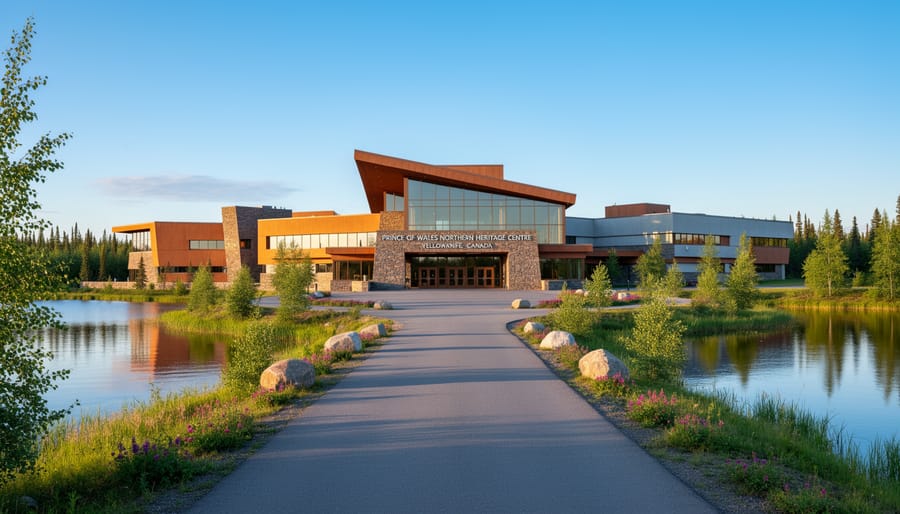
Yellowknife’s Prince of Wales Northern Heritage Centre stands as the definitive gateway to understanding the Northwest Territories’ layered past. Opened in 1979 and expanded significantly over the decades, this territorial museum houses artifacts spanning thousands of years, from pre-contact Indigenous life to the bush pilot era that opened the north.
Step through the entrance hall and you’re immediately surrounded by the region’s natural and cultural landscape. The Aviation Gallery preserves the legacy of legendary northern pilots, with vintage aircraft suspended overhead and exhibits detailing how these daring aviators connected isolated communities when roads didn’t exist. Original flight logs and personal stories bring this frontier aviation history alive.
The museum’s Indigenous galleries form its emotional core. Dene exhibits showcase traditional moosehide clothing, intricate beadwork, and ceremonial drums alongside contemporary art that bridges past and present. The Inuvialuit collection features hunting tools perfectly adapted to Arctic life, while Métis displays honor the distinct culture born from First Nations and European heritage. Unlike static museum displays elsewhere, interpretive signage here frequently includes community voices and oral histories, making the experience feel less like observation and more like conversation.
Rotating exhibits ensure returning visitors always discover something new, whether it’s archaeological finds from recent digs or collaborations with local artists. For those planning their visit remotely, the centre offers excellent online resources, including historical virtual field trips that preview the galleries. Admission remains free, reflecting the territorial government’s commitment to accessible cultural education.
2. Old Town Yellowknife Historic District
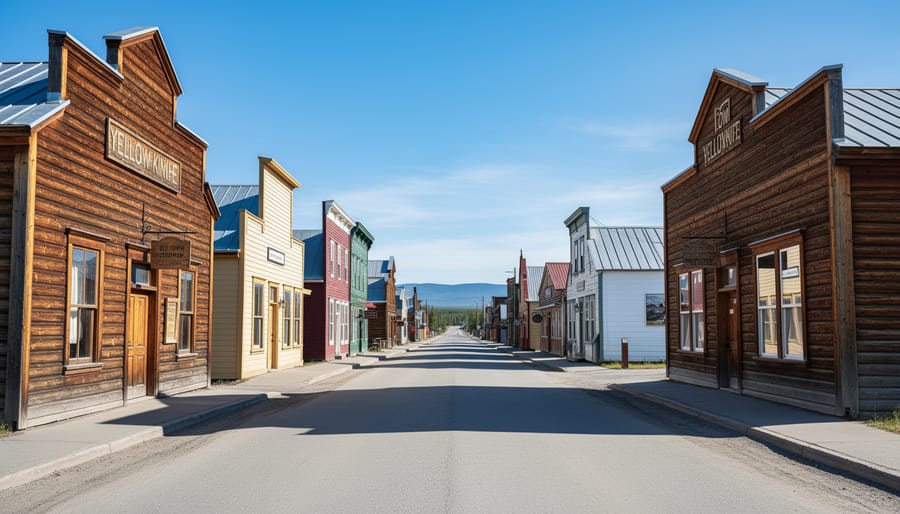
Perched on the rocky shore of Great Slave Lake, Old Town Yellowknife preserves the gritty authenticity of Canada’s last great gold rush. This compact historic district, clinging to the granite outcrops where prospectors first struck gold in 1934, offers a rare glimpse into frontier life that shaped the territorial capital.
The district’s weathered boardwalks wind past buildings that tell decades of northern ambition. Wildcat Café, built in 1937, still serves visitors in its log-frame dining room where miners once plotted claims. The corrugated metal warehouses along Ragged Ass Road, yes, that’s the official name, stand as monuments to the rough-and-tumble spirit that defined early Yellowknife. Unlike sanitized heritage parks elsewhere, Old Town remains a living neighbourhood where residents actually inhabit these storied structures.
What sets Old Town apart is its floating community. Houseboats bob in Yellowknife Bay, their colourful exteriors and ingenious adaptations reflecting generations of northern resourcefulness. Some date to the 1940s, when housing shortages forced creative solutions. Walking the shoreline reveals hand-built docks, repurposed materials, and the self-reliance that sustained this isolated community before modern infrastructure arrived.
The Bush Pilots’ Monument crowns the district’s high point, offering panoramic views while honouring aviators who opened the north. Below, trails connect mining headframes, historic fishing sites and the concrete foundations of long-abandoned operations. Summer walking tours led by local historians bring context to these remnants, but the district rewards independent exploration. Grab a map from the visitor centre and discover why Yellowknife earned its place as both territorial capital and living museum of northern determination.
3. Fort Simpson National Historic Site
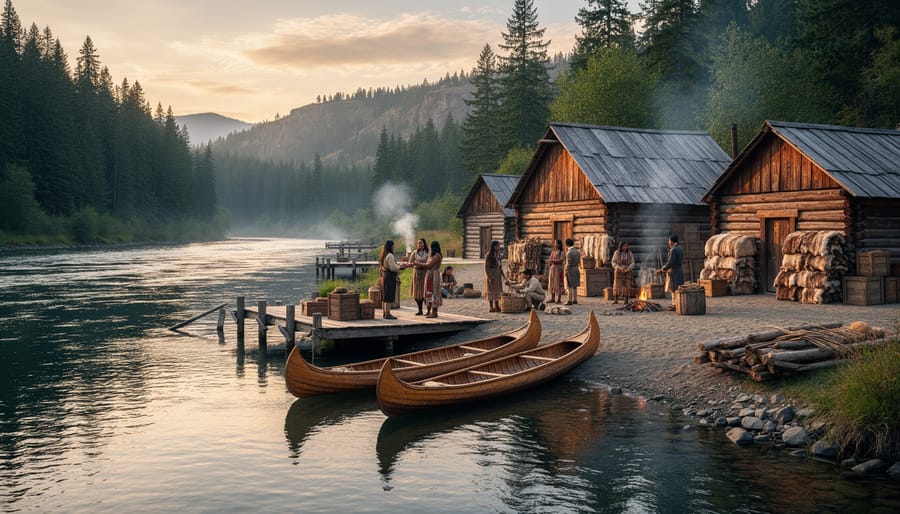
Standing at the junction where the muddy Liard River pours into the mighty Mackenzie, Fort Simpson tells a two-century story of commerce, cultural exchange, and collision. The Hudson’s Bay Company established this trading post in 1804, and its strategic location quickly made it the northwestern hub of the fur trade network stretching from Montreal to the Arctic Ocean.
The remaining heritage buildings transport you to an era when beaver pelts were currency and Indigenous trappers held the knowledge European traders desperately needed. The original log structures include the 1938 Heritage Centre, itself housed in a historic building, where exhibits detail the complex relationships forged through trade. You’ll see treaty documents, trading goods, and photographs revealing how Dene peoples maintained agency even as their world transformed around them.
What distinguishes Fort Simpson from other fur trade posts is its role as a crossroads where multiple Indigenous nations, Dene, Métis, and Slavey peoples, converged with Scottish traders, Catholic missionaries, and later gold rush prospectors heading north. The site demonstrates that frontier history was never simple conquest but rather negotiation, adaptation, and resistance playing out in daily transactions.
Visit the reconstructed storehouse to understand the economics: one made-beaver pelt equaled specific quantities of tea, tobacco, or ammunition. Walk the riverbank where York boats once landed, their crews exhausted from weeks paddling against current. The National Historic Site designation in 1969 recognized Fort Simpson’s significance in preserving this layered narrative where Indigenous sovereignty persisted alongside European ambition.
4. Délįnę (Great Bear Lake) and the Sahtúgot’įnę Cultural Sites
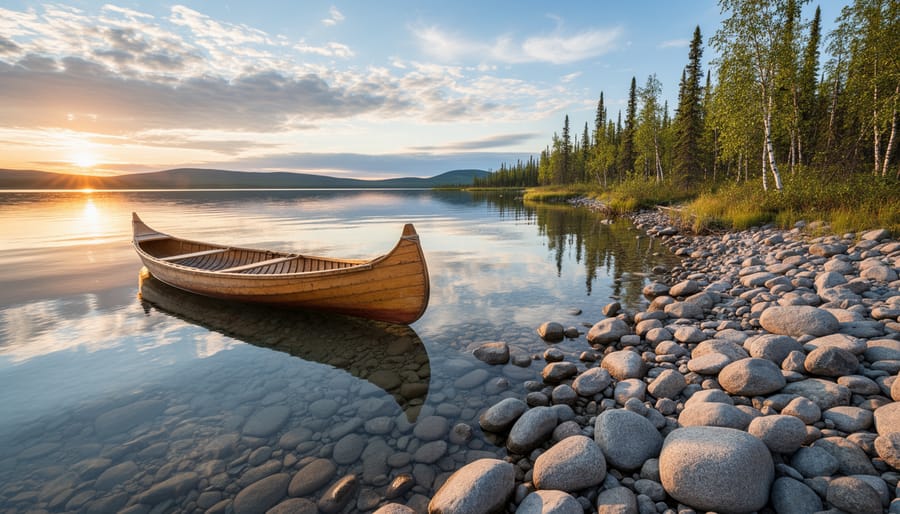
The remote community of Délįnę sits on the western shore of Great Bear Lake, the eighth-largest lake in the world and a place the Sahtúgot’įnę Dene have called home for thousands of years. This is sacred ground where spiritual traditions remain woven into daily life, and where one of the most profound intersections of Indigenous history and global events occurred.
Visitors who make the journey here, accessible only by air or winter ice road, encounter a landscape shaped by prophecy and consequence. The Sahtúgot’įnę elders speak of visions that foretold the arrival of strangers seeking something powerful beneath the earth. That prophecy materialized in 1930 when prospectors discovered pitchblende, uranium-rich ore that Dene hunters and trappers helped transport from the nearby Port Radium mine. The uranium from Great Bear Lake fueled the Manhattan Project, contributing to the atomic bombs dropped on Hiroshima and Nagasaki.
The weight of this history led Délįnę to declare itself a Village of Widows, honouring the miners who died from radiation exposure and the community’s unwitting role in nuclear warfare. Today, the community shares this story through guided experiences that respect both the gravity of the past and the enduring strength of Sahtúgot’įnę culture.
Cultural programming includes traditional knowledge sessions, stories told by elders, and visits to significant sites around Great Bear Lake. The landscape itself, crystalline waters, endless horizons, ancient fish camps, remains a testament to resilience and the continuation of a people deeply connected to their homeland.
5. Nahanni National Park Reserve Historic Sites
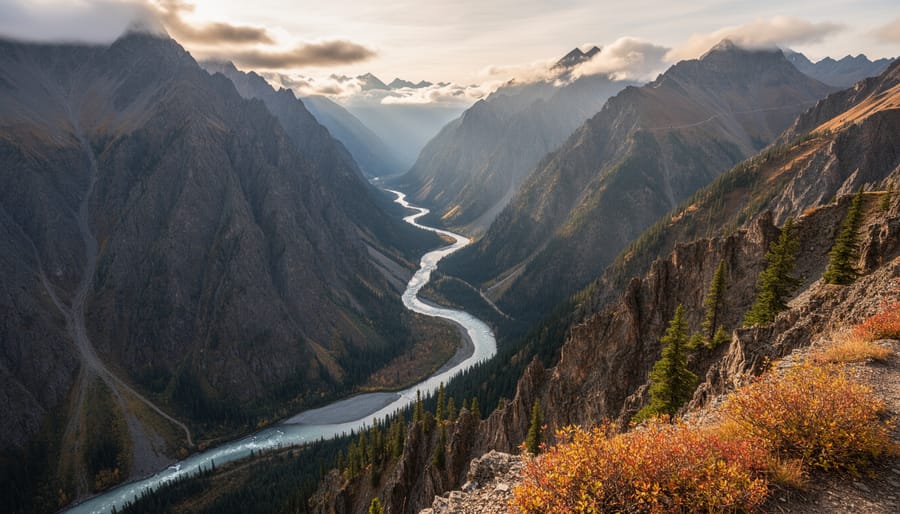
Deep in the southwestern corner of the Northwest Territories lies Nahanni National Park Reserve, a 30,000-square-kilometre wilderness where natural wonder and human history intersect across millennia. The park’s dramatic canyons and thundering Virginia Falls have drawn people for over 10,000 years, creating layers of heritage that reach far beyond its UNESCO designation for geological features.
The South Nahanni River served as a vital highway for Dene peoples, particularly the Dehcho (Slavey) and Mountain Dene, who developed sophisticated seasonal travel routes through these formidable mountains. Archaeological evidence along the riverbanks reveals ancient campsites, tool-making locations, and spiritual sites where ceremonies connected people to the land. The Dene name Naha Dehé (turbulent river) speaks to intimate knowledge passed through generations about navigating these powerful waters.
The park gained legendary status during the early 20th century when prospectors arrived seeking gold in what became known as Headless Valley, named after mysterious deaths that fed frontier mythology. These adventurers left behind cabins, mining equipment, and graves that now stand as reminders of the brutal realities facing those who underestimated this landscape.
Visiting the park’s heritage sites requires serious commitment. Most visitors arrive by floatplane or multi-day river expedition, often with Indigenous guides who share oral histories and traditional place names that government maps miss. The remoteness itself preserves authenticity, offering heritage seekers a rare chance to experience historical landscapes largely unchanged since those first travelers paddled upstream thousands of years ago.
6. Inuvik and the Igloo Church (Our Lady of Victory)
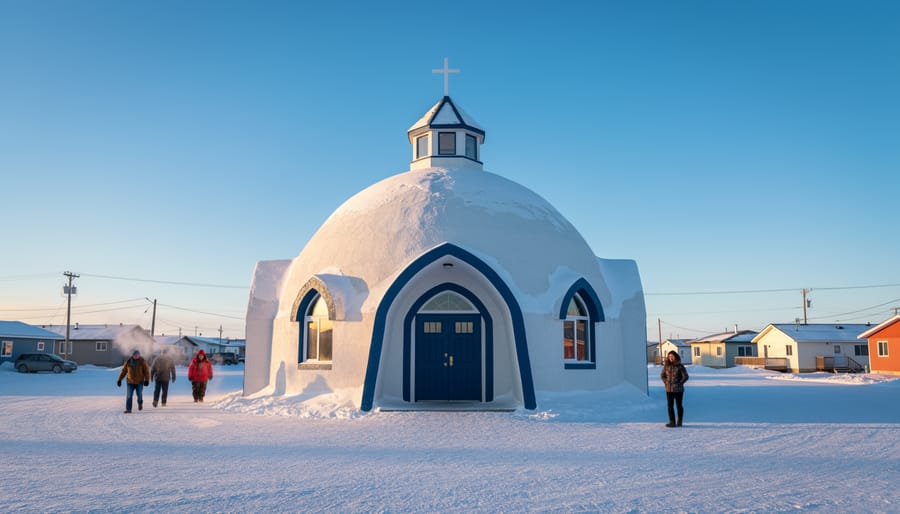
Inuvik stands as a fascinating architectural experiment from the 1950s, when the Canadian government decided to construct an entirely new administrative center above the Arctic Circle. Unlike older northern settlements that evolved organically, Inuvik was engineered from scratch with innovative solutions to permafrost challenges: utilidors carrying water and sewage above ground, buildings on pilings, and a grid layout designed for extreme weather efficiency.
The town’s crown jewel is Our Lady of Victory Church, completed in 1960 and instantly recognizable by its igloo-inspired dome. The structure wasn’t just architectural whimsy, the circular design minimizes heat loss and withstands fierce Arctic winds. Inside, murals created by Inuvialuit artist Mona Thrasher blend Catholic imagery with Indigenous symbolism, depicting biblical scenes populated by northern wildlife and figures in traditional parkas. The stations of the cross reimagined through an Arctic lens make this one of the most culturally significant mission buildings in northern Canada.
Beyond the iconic church, Inuvik reveals layers of Inuvialuit heritage through the Ingamo Hall Friendship Centre and community events that showcase drum dancing, throat singing, and traditional crafts. The Western Arctic Regional Visitors Centre provides context for understanding the Beaufort Delta region’s 10,000-year human history, from ancient hunting grounds to the modern Inuvialuit settlement claims that reshaped northern governance. Walking Inuvik’s elevated boardwalks connects Cold War-era planning vision with living Indigenous culture.
7. Tuktoyaktuk Pingos and Coastal Heritage
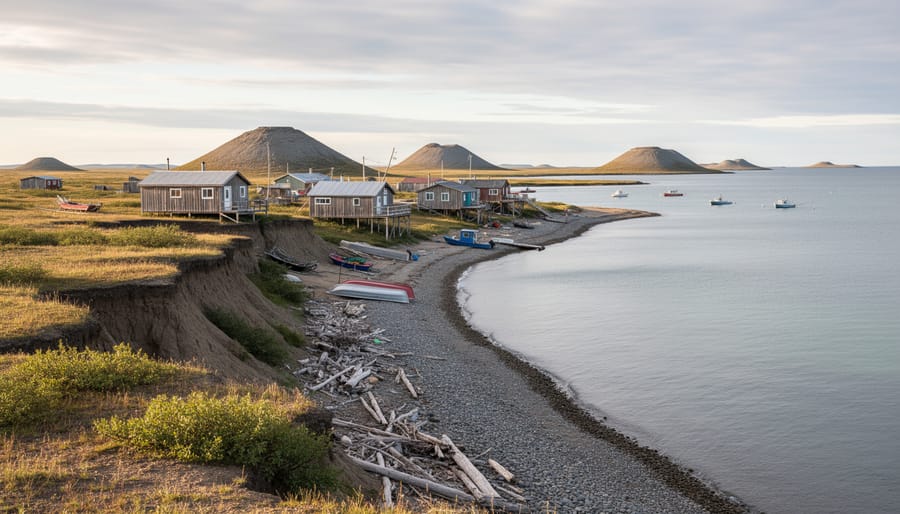
Since the Inuvik-Tuktoyaktuk Highway opened in 2017, visitors can drive to the shores of the Arctic Ocean and discover landscapes that have anchored Inuvialuit life for millennia. Tuktoyaktuk, “Tuk” to locals, sits at the meeting point of the Mackenzie Delta and Beaufort Sea, where distinctive ice-cored hills called pingos rise from the tundra like frozen sentinels. These geological formations hold profound spiritual significance for the Inuvialuit, serving as navigation markers, seasonal camp locations, and features woven into oral histories passed down through generations.
The Tuktoyaktuk Peninsula contains more than 1,400 pingos, the highest concentration on Earth. Ibyuk Pingo, standing 49 metres tall, is the second-largest in Canada and accessible via a short interpretive trail. Archaeological evidence surrounding these sites reveals at least 1,000 years of continuous habitation, with tent rings, food caches, and seasonal hunting camps demonstrating sophisticated adaptations to one of the planet’s harshest environments.
The hamlet itself preserves remnants of earlier eras: the old Hudson’s Bay Company store, weathered whaling-era structures, and the community freezer carved into permafrost. Local Inuvialuit guides share stories that connect these physical sites to living culture, explaining how their ancestors navigated vast distances, read ice conditions, and maintained local heritage traditions through dramatic environmental changes. The shoreline walk offers views of traditional fishing sites still used today, illustrating the continuity between ancient practices and contemporary Inuvialuit life in this remote coastal settlement.
8. Fort Resolution Mission and Trading Post Sites
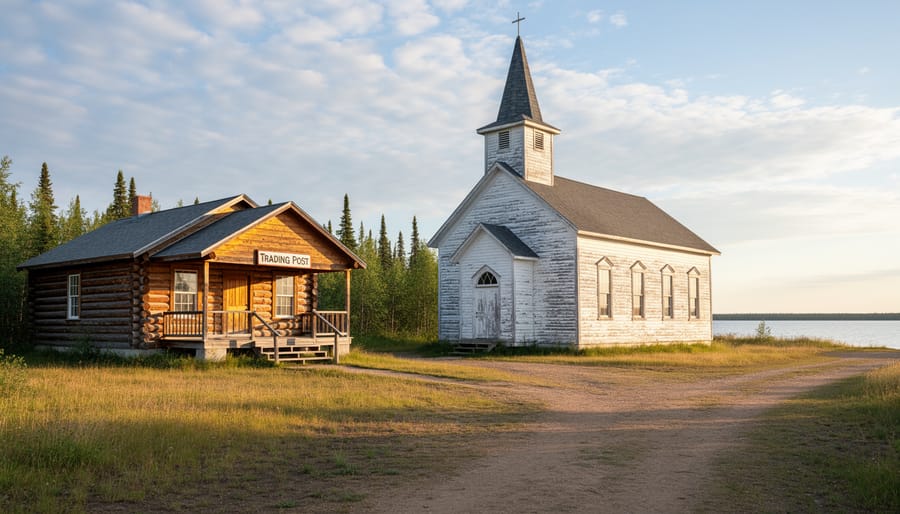
At the southern tip of Great Slave Lake, Fort Resolution stands as one of the Northwest Territories’ oldest continuously inhabited settlements, where centuries of Chipewyan Dene presence converge with the layered histories of Catholic missions and fur trade commerce. The weathered Mission of Nativity church, dating to 1852, remains an enduring landmark among these old historical places its hand-hewn log construction and simple bell tower testament to the persistence of faith and community in the remote north.
Walking through Fort Resolution reveals a palimpsest of cultural exchange and adaptation. The original trading post sites along the shoreline, though largely vanished beneath earth and time, mark where the Hudson’s Bay Company established one of its northernmost outposts in the early 1800s. Nearby, the reconstructed mission buildings and historic cemetery tell stories of Oblate missionaries who learned Chipewyan and developed a syllabic writing system still used today, forever altering Indigenous spiritual practices while documenting the language and traditions they encountered.
The Deninu Kųę́ First Nation maintains interpretive sites that contextualize this complex history beyond the missionary and trader narratives, honoring the Chipewyan peoples who have called these shores home for millennia and whose knowledge sustained newcomers in an unforgiving landscape. Seasonal boat access and limited amenities make Fort Resolution challenging to reach, but visitors willing to make the journey discover an authentically preserved heritage community where history isn’t performed for tourists but lived daily.
Planning Your Northwest Territories Heritage Journey
Planning a heritage journey through the Northwest Territories requires different thinking than typical road trips. Most sites sit hundreds of kilometres apart, accessible only by plane, ice road, or seasonal highway. Summer (June through August) offers the most access and 24-hour daylight, but fall brings stunning colours and fewer crowds. Winter travel demands serious preparation but rewards you with ice roads opening remote communities and the northern lights dancing overhead.
Book accommodations and flights months ahead, limited options fill quickly in small communities. Several tour operators specialize in heritage-focused experiences: Aurora Village Cultural Tours connects visitors with Yellowknife’s Indigenous history, while Simpson Air offers fly-in packages to Fort Simpson and Nahanni. Arctic Tour Company designs multi-site itineraries linking cultural centres with natural landmarks.
Many heritage sites belong to living Indigenous communities, not static museums. Connect with local cultural centres before your visit, they’ll explain protocols and sometimes arrange elder-guided experiences. The Dene Nation and Inuvialuit Regional Corporation websites list community contacts and upcoming cultural events. Hiring Indigenous guides transforms your visit from observation to genuine understanding. Budget generously: northern travel costs run three to five times southern Canada prices, but the experience of standing where centuries of history unfolded justifies the investment.
Common Questions About Heritage Sites in the Northwest Territories
Visiting heritage sites across the Northwest Territories raises practical questions, especially given the region’s remote nature and the cultural sensitivity required when engaging with Indigenous heritage. Here are answers to the most common concerns from heritage travelers.
When is the best time to visit Northwest Territories heritage sites?
June through early September offers the most accessible conditions, with long daylight hours, open roads, and active cultural programming at most sites. Winter visits are possible but require careful planning and often limit access to remote locations.
Do I need a guide to visit these heritage attractions?
While major sites like the Prince of Wales Northern Heritage Centre are self-guided, many culturally significant locations require or strongly benefit from Indigenous-led tours that provide context and ensure respectful access. Remote sites like Nahanni National Park Reserve require registered outfitters.
How much should I budget for a heritage-focused trip?
Expect higher costs than southern Canada due to remoteness. Daily budgets typically range from $200-400 for accommodations and meals, with guided heritage tours adding $150-500 per day depending on location and group size.
What cultural protocols should I follow at Indigenous heritage sites?
Always ask permission before photographing people or ceremonies, respect restricted areas, and consider hiring Indigenous guides who can facilitate proper engagement with communities and sacred sites.
Connecting multiple heritage sites requires realistic planning. The vast distances mean you’ll likely need to fly between major hubs like Yellowknife, Inuvik, and Fort Simpson, with each leg adding travel time and cost. Many visitors focus on one region per trip rather than attempting to cover the entire territory, allowing deeper engagement with fewer sites and the communities that preserve them.
The Northwest Territories stand apart in Canada’s heritage landscape, not as a collection of museum pieces behind glass, but as places where history breathes through living Indigenous cultures, weathered trading posts, and landscapes unchanged since the first peoples walked them millennia ago. Each site on this list connects visitors to stories that shaped the North: the resourcefulness of Dene and Inuvialuit communities, the audacity of fur traders and prospectors, the quiet power of places where uranium left Délįnę for the Manhattan Project. These aren’t attractions manufactured for tourism; they’re authentic witnesses to human persistence in one of Earth’s most demanding environments.
Visiting these heritage sites transforms how you understand Canada itself. The Northwest Territories reveal the nation’s Indigenous foundations, its complex colonial encounters, and the ongoing relationship between people and an unforgiving but magnificent land. By traveling respectfully, supporting local guides, and recognizing these places as homelands first and tourist destinations second, you participate in preserving stories that matter far beyond the territories’ borders.
