
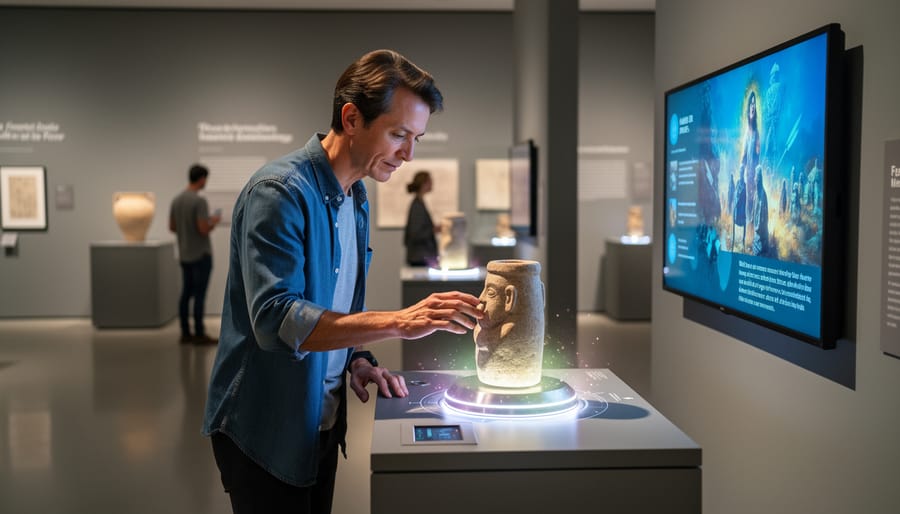
Engaging with an interactive museum exhibit means doing more than watching: you touch, choose, question, and respond, and the exhibit shapes what you learn from those choices. The best way to do it is simple. Arrive with one question, give yourself time to follow the thread, and treat every button, artifact, or voice as an invitation rather than a prop. It works because memory holds onto what we take part in far longer than what we merely pass by.
Picture standing at a table where a map glows beneath your hands. You trace a river route and a story rises, perhaps an Indigenous guide describing the same land that fur traders later called a highway. Nothing is read to you. You uncover it. That’s the heart of interactivity, and it’s why these exhibits can feel less like displays and more like conversations.
You don’t have to be inside a gallery to join in, either. Virtual journeys now bring the same hands-on curiosity to a laptop or tablet, letting you wander, listen, and explore at your own pace.
In the sections ahead, we’ll define what truly counts as interactive, walk through a virtual visit, share practical ways to engage with care and respect, and show you how to judge whether an exhibit is worth your time.
What Makes an Exhibit Truly Interactive
From Glass Cases to Guided Journeys
For a long time, the museum visit followed a quiet script. You walked the hall, read the small card beside each object, and kept your hands to yourself. The glass case protected the artifact, but it also kept visitors at arm’s length from the people who once used it.
That began to shift as curators and educators asked a simple question: what do visitors actually remember? The answer was rarely the label text. It was the moment they lifted a replica, pressed a button to hear a recorded voice, or followed a path they chose themselves.
Heritage sites took up the same idea. Costumed interpreters, working demonstrations, and hands-on stations invited people into the story rather than past it. Telling that story honestly also meant making room for voices once left out, including Indigenous communities speaking for their own histories.
Seen this way, virtual engagement is a natural next step. Screens simply carry the same invitation to touch, choose, and listen to more people, in more places.
Where Virtual Visits Meet Real Places
A good online exhibit never floats free of the ground it describes. It points you back to a real place: a fur trade post where voyageurs once weighed furs, a lighthouse that still guards a rocky headland, or a heritage district whose narrow streets keep the shape they had generations ago.
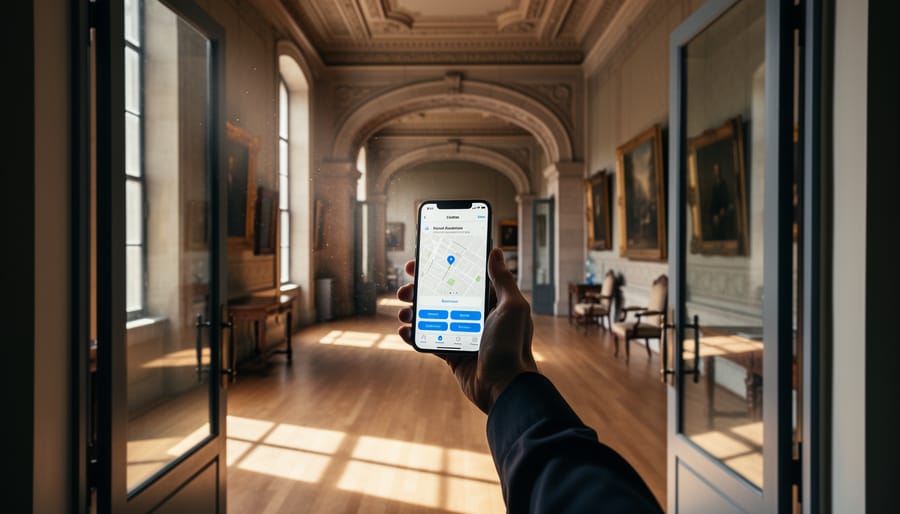
When a virtual visit is done well, it anchors each story to that landscape. A map pin shows where the post sits along a river route. A 360-degree view lets you stand where the keeper climbed the stairs. A short clip of the surrounding water or street explains why people settled, traded, or built there at all.
That sense of place matters, especially for sites far from where you live. You begin to understand distance, weather, and terrain, the things that shaped daily life. It also gives you a reason to look at the Indigenous names and territories that came long before any post or light was built. The screen becomes a doorway, and the real site waits on the other side.
Stepping Into the Story: A Virtual Journey Through an Exhibit
Listening to Voices That Shaped the Place
Some of the most powerful moments in an interactive exhibit come when the screen goes quiet and a person begins to speak. Oral histories and first-person accounts carry the texture of lived experience: the pause before a name, the humour in a memory, the weight of a story handed down across generations. Hearing a voice does something a caption never can.
When you explore a historic place, listen for whose voices are present. For thousands of years, Indigenous peoples have known these lands by names that describe what the places mean, from where the rivers run to where families gathered each season. Those place names are not footnotes. They are histories in themselves, and an exhibit that includes them, spoken by Indigenous speakers where possible, offers a fuller and more honest understanding of the landscape.
Look for exhibits developed in partnership with Indigenous communities, where Elders, knowledge keepers, and cultural advisors have helped shape the story rather than simply being quoted in it. You can often tell by the credits, the acknowledgements, and whether the narration speaks with communities instead of about them. Many of the best virtual field trips make these voices central, and they reward the patience of a slow, attentive listen.
Choosing Your Own Path Through the Past
The best interactive exhibits trust you to decide where to go next. A branching narrative might offer two doorways, one leading toward a trader’s ledger and the other toward the story of the community whose land the post stood on. Neither choice is wrong, and each shapes what you learn first.
Timelines work the same way. Instead of marching from one date to the next, you can slide to the moment that sparks your curiosity and then move backward or forward to understand how it came about. Map-based explorations add a sense of place, letting you tap a river crossing, a harbour, or a settlement and watch its stories unfold.
This mirrors what happens when you walk a real heritage site. You drift toward the lighthouse stairs, linger at a doorway, and double back to read a plaque you nearly missed. Following your own questions, rather than a fixed route, is what turns information into understanding.
Practical Ways to Deepen Your Engagement
Bringing Students and Families Along
A shared visit works best when the exhibit becomes a conversation instead of a quiz. Start with open questions that have no wrong answers: “What would you want to ask the person in this story?” or “What surprised you about how people lived here?” These invite younger children and teenagers alike to speak from their own curiosity.
For a scavenger-hunt feel, hand out three or four prompts before you begin. Younger kids might hunt for a sound, a colour, or an object they can name. Older students can look for a date, a place name, or a voice they’d like to hear more from. Keep the list short so it guides attention without turning the visit into a race.
Match the depth to the age. Little ones enjoy touching, tapping, and choosing; tweens often like a challenge, such as finding two sources that tell the same story differently. If you’re exploring in headsets or immersive tours, these virtual reality tips can help everyone settle in comfortably.
Afterward, let the learning keep going. Ask each person to draw a favourite moment, retell the story in their own words, or find the place on a map. A few minutes of this at the dinner table or in class helps the stories stay with them long after the screen goes dark.
Making Digital Visits Accessible for Everyone
Accessibility is what turns a clever exhibit into one that welcomes everyone. When you open a digital visit, look first for captions on video and oral histories, so you can follow every story whether you’re in a noisy room, a quiet library, or listening without sound. Audio description, which narrates what’s on screen, opens the same journey to visitors who are blind or have low vision. Adjustable text size and strong colour contrast help anyone who finds small type tiring, and keyboard-friendly navigation means you don’t need a mouse or touchscreen to explore.
Connection matters too. Many sites now offer low-bandwidth versions, with lighter images and downloadable transcripts, so a slow rural connection doesn’t close the door.
These choices also carry heritage farther than a visit ever could. A person who can’t travel to a remote fur trade post or coastal lighthouse, because of distance, cost, health or mobility, can still step into its story from home.
How to Choose Interactive Exhibits Worth Your Time
Not every interactive exhibit earns the time you give it. Some are polished but shallow, a few taps and a flash of animation before you’ve learned anything. Others quietly draw you in for an hour. When we weigh an exhibit’s quality, we look at a handful of qualities rather than chase any particular list of what’s currently on offer, because those offerings change often.
Start with depth of storytelling. A good exhibit gives you a reason to care, a person, a turning point, a question that unfolds as you move through it. If the interaction exists only to show off the technology, the story is usually thin.
Next, look at how the place and its people are represented. Strong exhibits are accurate about what is known and honest about what is still debated. They treat Indigenous history as living and continuing, not as a sidebar or a distant chapter, and they use place names and voices that come from the communities themselves. Look for credits that mention partnerships with Indigenous knowledge keepers.
Then consider the practical experience. Can you find your way around without a manual? Are there captions, audio description, and adjustable text? A visit shouldn’t hinge on how comfortable you are with technology.
Finally, check for a tie to a real historic place. The best virtual experiences make you feel the ground beneath a fort, a harbour, or a heritage street, and they make you want to visit.
When an exhibit meets most of these marks, it’s worth settling in and exploring slowly.
For Site Managers: Inviting Visitors Into the Story
If you manage a heritage site, interactive and virtual elements can carry your story well beyond your front door. The good news is that you don’t need a sprawling digital program to begin. Start with a single strong story, one that visitors already ask about or that only your place can tell, and build the experience around it. A modest, well-told journey will engage people far more than a collection of half-finished features.
Next, bring the right people to the table early. Community members, local historians, and Indigenous knowledge keepers can shape how a place is interpreted, from the names used to the voices heard. Their involvement should begin at the planning stage rather than arriving as a final review, and it should be guided by their own terms for how knowledge is shared.
Plan for accessibility from the start, too. Captions, audio description, adjustable text, and options that work on slower connections open your story to people who may never be able to travel to you.
Finally, let others find you. Sites can register with Northwest History Travel Events to gain national recognition, which helps curious visitors discover what you offer, both online and in person.
Common Questions About Interactive and Virtual Exhibits
Most readers arrive with the same handful of practical worries, so here are plain answers to the questions that come up most often.
Do I need special equipment to join a virtual exhibit?
Usually not. A phone, tablet, or computer with a web browser and a steady connection is enough for most exhibits. Headsets can add immersion for 360-degree tours, but they are rarely required, and many sites offer low-bandwidth versions.
Can a virtual exhibit replace visiting in person?
It works better as a companion than a substitute. Online exhibits help you prepare, revisit favourite moments, or reach places you can’t travel to, but standing on the ground where history happened offers a sense of scale and atmosphere a screen can’t fully match.
How can I tell if an exhibit respects Indigenous perspectives?
Look for Indigenous voices speaking for themselves, traditional place names alongside current ones, and credit to the communities or knowledge keepers who helped shape the story. Exhibits developed in partnership, rather than simply about a people, tend to feel more accurate and more alive.
Are virtual tours free?
Some are, and some charge a fee or ask for a donation, so access and costs vary from site to site. It’s worth checking each organization’s own pages before you plan a visit.
Classrooms are another frequent question, and the answer is generally yes. Many interactive exhibits suit students well, especially when you pair them with a guiding question and time to discuss what they found. Smaller community organizations often build experiences that feel especially personal; take the way a local group can bring island traditions to life through hands-on storytelling, which shows how much a modest, well-told exhibit can offer. Whatever you choose, give yourself permission to move slowly and follow what sparks your curiosity.
Engagement, at its heart, begins with curiosity and grows into connection. A touchscreen, a recorded voice, or a map you can wander across only does its work when you bring a question and a little patience. Done well, these experiences carry the stories of Canada’s historic places out of the glass case and into your own hands, wherever you happen to be sitting.
So choose a place that stirs something in you. It might be a fur trade post, a weathered lighthouse, or a heritage district whose streets you’ve never walked. Begin a virtual journey there, linger at the details, and listen closely to the voices that shaped it, including the Indigenous communities whose knowledge and names run deeper than any plaque.
Let those stories pull you onward. You may find that a screen is only the first step, and that the real place is waiting. When you’re ready, explore our directory of historical landmarks and see where your curiosity leads next.
