
Ancient history trivia transforms dusty dates and forgotten empires into conversation starters that reveal just how strange, brilliant, and surprisingly relatable our ancestors were. These bite-sized historical nuggets satisfy our curiosity while connecting us to the physical places where history unfolded, particularly across Canada’s landscape where ancient Indigenous civilizations, European contact sites, and early settlements offer tangible links to global historical narratives.
The appeal of historical trivia lies in its power to make the past immediate. Learning that ancient Romans organized their weeks into eight days rather than seven, or discovering the ingenuity behind Egyptian pyramid construction, creates mental bridges between our modern lives and civilizations separated from us by millennia. These facts aren’t merely entertaining; they’re entry points into deeper understanding of how humans have always grappled with the same fundamental questions about governance, belief, innovation, and survival.
Canada’s historical sites provide the perfect backdrop for exploring these ancient stories. From Indigenous archaeological sites preserving thousands of years of habitation to colonial-era landmarks that connected New World settlements to Old World powers, our country’s heritage locations let you walk through time rather than simply read about it. When you stand at a centuries-old trading post or examine artifacts in a heritage museum, trivia transforms into lived experience.
This collection moves beyond the standard question-and-answer format. Each piece of trivia serves as an invitation to explore further, whether through visiting a nearby historical site, examining primary sources, or tracing how ancient innovations still shape our world in 2026.
Why Ancient History Trivia Captivates Modern Minds
Our brains are hardwired for stories, not spreadsheets of dates and dynasties. That’s why ancient history trivia resonates so powerfully right now, it repackages the past into bite-sized narratives that stick. When you learn that ancient Romans organized their lives around an eight-day week rather than our familiar seven, your mind immediately wants to know why. That single fact opens a door to questions about commerce, religion, and how civilizations structure time itself. It’s curiosity in its purest form, and it transforms passive consumption of information into active engagement with the human story.
The surge in ancient history trivia also speaks to something deeper: our collective search for identity and continuity in an increasingly fragmented world. Knowing where we come from, whether it’s understanding the sophisticated governance systems of Canada’s Indigenous peoples or the engineering brilliance of ancient aqueducts, grounds us in a larger narrative. History stops being something that happened to other people and becomes the foundation we’re standing on. For Canadians especially, ancient trivia about First Nations technologies and knowledge systems that predate European contact by thousands of years reshapes our understanding of this land’s true age and cultural depth.
What makes trivia particularly powerful is its accessibility. You don’t need a history degree to appreciate the fact that Indigenous peoples developed complex calendar systems aligned with seasonal changes and astronomical observations. These nuggets of knowledge meet people where they are, in social conversations, at dinner tables, scrolling through content, and plant seeds of curiosity that grow into genuine appreciation. They strip away the intimidating academic veneer that surrounds formal historical study and reveal the fascinating humans beneath. Each piece of trivia is an invitation, a glimpse through a keyhole that makes you want to open the door and explore the full room beyond.
Fascinating Ancient History Facts You Never Learned in School
Ancient Timekeeping and Calendar Systems
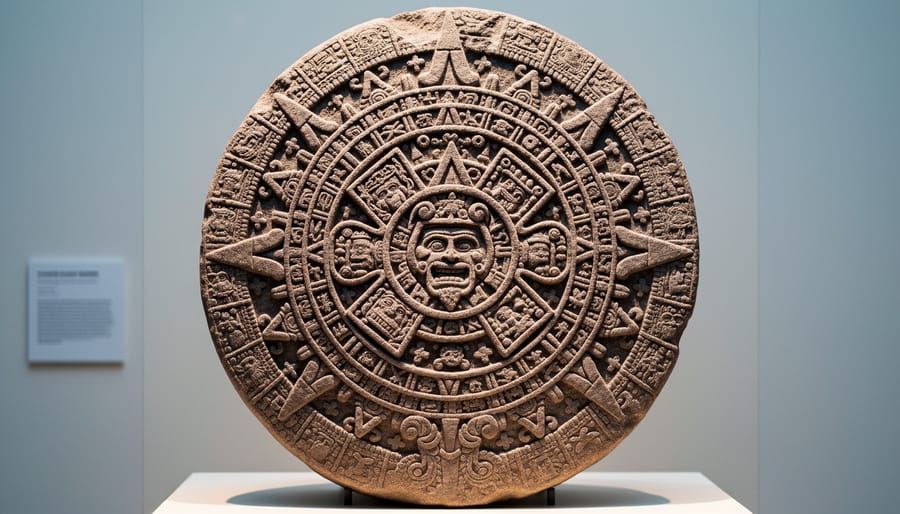
The Romans didn’t always count their weeks the way we do. Rome’s eight-day week called the nundinal cycle, governed commerce and agriculture for centuries before the seven-day system took hold. Market days happened every eighth day, and farmers would trek into town to sell goods, conduct legal business, and hear political announcements.
This wasn’t Rome’s only quirky calendar innovation. Their year originally had just ten months, leaving a gap of unmeasured winter days that didn’t belong to any month at all. January and February came later as administrative patches. The calendar fell so out of sync with seasons that Julius Caesar eventually scrapped it entirely in 46 BCE, creating a year with 445 days to reset everything.
Ancient Egypt took a different approach, dividing their year into three seasons tied to the Nile’s flooding cycle. Each season had four months of exactly thirty days, with five extra days tacked on at the year’s end for festivals. No leap years meant their calendar drifted slowly against the solar year, but the system worked for agriculture and religious ceremonies for over three thousand years.
These ancient solutions reveal how differently cultures perceived time itself, shaping everything from trade networks to spiritual practices around rhythms that made sense for their environments.
Indigenous Knowledge Systems in Ancient Canada
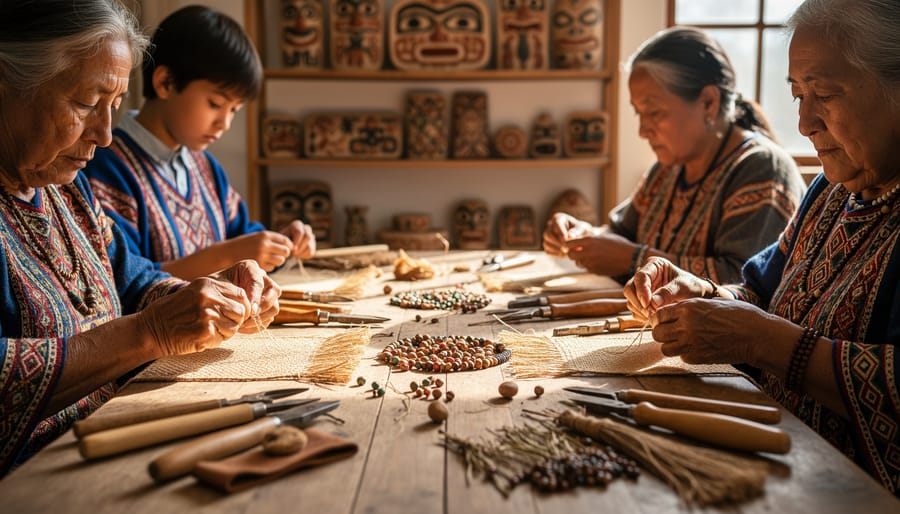
Long before European ships reached North America’s shores, Indigenous peoples across what is now Canada had developed engineering marvels, democratic governance, and scientific knowledge that rivals modern understanding. The Haudenosaunee Confederacy established a sophisticated constitutional democracy centuries before the Magna Carta, with a system of checks and balances that would later influence the United States Constitution. Their Great Law of Peace outlined representative government, impeachment processes, and women’s political authority in ways that seemed revolutionary to 18th-century European observers.
Indigenous astronomical knowledge was equally impressive. Coast Salish peoples created star maps and tidal calendars precise enough to predict salmon runs years in advance. Inuit navigators developed cognitive mapping systems so accurate they could traverse thousands of kilometers of Arctic terrain without written records, using wind patterns, snow formations, and celestial markers. These weren’t primitive survival skills but sophisticated knowledge systems passed down through generations.
Engineering achievements tell another remarkable story. The Métis Red River cart, though post-contact, evolved from ancient wheel-free travois technology that moved massive loads across diverse terrain. Indigenous peoples engineered extensive agricultural systems, including the Three Sisters companion planting method that maximized soil nutrition through intercropping corn, beans, and squash. Archaeological evidence reveals pre-contact trade networks stretching from the Pacific to the Great Lakes, requiring complex logistics and diplomatic relationships. These weren’t isolated communities but interconnected civilizations with governance structures, scientific practices, and technological innovations that functioned for millennia before 1492.
Turning Ancient History Trivia Into Cultural Exploration
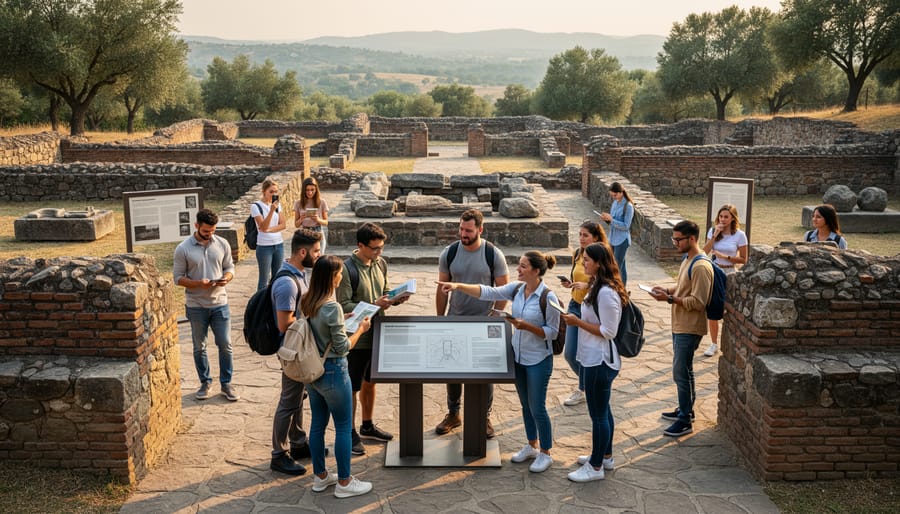
That eight-day Roman week you learned about earlier isn’t just a clever conversation starter, it’s your invitation to experience how ancient peoples actually lived. When a piece of trivia sparks genuine curiosity, it creates the perfect motivation to visit the physical places where history unfolded. The gap between knowing an interesting fact and standing where it happened is smaller than you think, especially with Canada’s wealth of accessible historical sites.
Start with what intrigued you. Maybe it was Indigenous timekeeping systems, ancient trade networks, or sophisticated governance structures that flourished here thousands of years before European contact. That single fact serves as your research anchor. Use it to identify which Canadian sites connect directly to that historical thread. A question about ancient navigation techniques might lead you to coastal Indigenous settlements, while curiosity about early democratic systems could point you toward Haudenosaunee heritage sites.
- Choose one trivia fact that genuinely interests you, something that made you pause and think.
- Research which historical period, culture, or geographic region that fact relates to within Canada.
- Search heritage databases or regional tourism sites for physical locations connected to that topic.
- Read the site’s history before visiting to understand how your trivia fact fits into the broader cultural context.
- Prepare specific questions about your trivia topic to ask guides or interpreters during your visit.
- Document what you learn to deepen your understanding and share with others.
The transformation happens when you move beyond passive consumption. Historic Places Days and similar events across the country often feature expert-led tours, demonstrations, and storytelling that bring trivia to life in ways no article can capture. You’ll hear pronunciation of Indigenous place names from knowledge keepers, see archaeological evidence firsthand, and understand the “why” behind the “what.”
Physical sites offer sensory experiences that cement learning. Walking the same paths, feeling the climate, and seeing the landscape that shaped ancient decisions creates embodied knowledge. That Roman calendar trivia becomes more memorable after you’ve explored how Canadian Indigenous peoples marked seasonal changes through direct observation of their environment at preserved settlement sites. The connection between a fact in your mind and a place under your feet transforms casual interest into lasting understanding.
Creating Your Own Ancient History Trivia Experience
Research Resources for Canadian Historical Facts
Verifying ancient history trivia requires moving beyond generic internet searches to tap credible institutional resources. Library and Archives Canada houses digitized primary documents, including Indigenous treaty records and early settlement accounts that provide firsthand perspectives rather than secondhand interpretations. Provincial archives across Canada maintain region-specific collections, the Royal BC Museum’s online database, for instance, contains archaeological reports and ethnographic records that contextualize coastal Indigenous technologies.
Museums serve as verification hubs, though their digital collections vary in depth. The Canadian Museum of History offers accessible fact sheets on pre-contact civilizations, while smaller regional museums often hold hyperlocal details about specific sites that never make it into broader publications.
Indigenous knowledge keepers remain the most vital, and most overlooked, resource for verifying facts about ancient Indigenous practices. Many First Nations, Métis, and Inuit communities have established cultural centers or education offices that share information respectfully. Approaching these communities requires genuine consultation, not extraction: explain your purpose, respect protocols around sacred knowledge, and understand that some information isn’t meant for public trivia.
Academic journals like the Canadian Journal of Archaeology provide peer-reviewed findings, though their technical language demands patience. Cross-reference multiple sources before presenting any fact as verified, what seems like compelling trivia might be outdated scholarship or colonial misinterpretation that needs correction.
Making Trivia Interactive at Historical Sites
Site managers can transform passive observation into active discovery by weaving trivia into the visitor experience at multiple touchpoints. Start with interpretive signage that poses questions rather than simply stating facts, “Did you know Indigenous peoples here tracked astronomical events for thousands of years?” invites curiosity that traditional plaques don’t. Position these questions where visitors naturally pause, creating spontaneous learning moments.
During guided tours, pause before revealing key historical information to let visitors guess based on visible clues. This technique, similar to approaches used on the Miracles & Mysteries Tour turns audiences into active participants rather than passive listeners. The dopamine hit of guessing correctly creates stronger memory formation than hearing facts alone.
For events, design trivia stations where families can earn stamps or tokens by answering questions correctly, redeemable for small prizes or site mementos. QR codes on artifacts or structures can link to quick trivia challenges that reveal deeper context, visitors scan, answer, and immediately see how their knowledge stacks up. This gamification increases average visit duration while boosting social media sharing as visitors photograph their scores. Track which trivia questions generate the most engagement to refine your historical interpretation and identify what resonates most with your audience.
Where Ancient History Comes Alive Across Canada
The trivia you’ve collected about ancient calendars, Indigenous technologies, and early settlement patterns points directly to real places where these stories unfolded. Canada holds more than 600 documented historical sites that transform trivia from abstract facts into walkable landscapes and touchable artifacts.
Archaeological sites offer the most direct connection between trivia and physical evidence. L’Anse aux Meadows in Newfoundland stands as the only confirmed Norse settlement in North America, where you can see reconstructed sod buildings and examine the iron-working evidence that proved Vikings reached this continent five centuries before Columbus. Red Bay preserves 16th-century Basque whaling operations, with underwater archaeology revealing shipwrecks and rendering ovens that processed whale oil for European markets. Each artifact at these sites answers specific trivia questions about maritime technology, trade networks, and cultural exchange.
Indigenous cultural centers bridge thousands of years between ancient knowledge systems and living communities. These sites don’t just display historical artifacts, they demonstrate continuous practices in governance, medicine, astronomy, and environmental management that your trivia questions only hint at. Elders and knowledge keepers provide context that no textbook captures, explaining how seemingly simple trivia facts about seasonal calendars or navigation techniques actually represent sophisticated scientific understanding.
The platform’s collection spans:
- Archaeological excavation sites with visible stratigraphy showing millennia of human occupation
- Indigenous cultural centers demonstrating ancient technologies still practiced today
- Preserved trading posts and settlements revealing early economic networks
- Ceremonial grounds and astronomical observation sites showing ancient scientific knowledge
- Maritime heritage sites like Battle Harbour documenting centuries of coastal adaptation
Each site entry includes geographic coordinates, visiting information, and historical context that extends the trivia you’ve discovered into three-dimensional experience. When you encounter a fascinating fact about ancient timekeeping or Indigenous astronomy, search the platform for nearby sites where those concepts shaped actual communities. The question that sparked your curiosity can become the destination for your next exploration.
Ancient history trivia isn’t just entertainment, it’s your personal gateway to understanding the layers of human experience that shaped the world we inhabit today. Those surprising facts about Roman calendars or Indigenous governance systems aren’t meant to sit idle in your memory. They’re invitations to step into the physical spaces where these stories unfolded, to stand on ground that holds centuries of human ingenuity, struggle, and triumph.
Canada’s 600+ historical sites await your curiosity. That fascinating trivia about ancient timekeeping methods? It connects directly to archaeological sites where you can witness how our ancestors marked the seasons. The sophisticated Indigenous knowledge systems you’ve discovered? They’re preserved and honored at cultural centers across the country, where communities continue these living traditions.
If you manage a historical site that deserves recognition, consider registering it on our platform. Your site might spark the same curiosity in others that this trivia sparked in you.
Transform what you’ve learned today from interesting facts into lived experience. Pick one piece of trivia that genuinely intrigued you, then find the Canadian historical site where that story comes alive. History isn’t something that happened, it’s something you can still touch, explore, and carry forward.
