
The best historical virtual field trips in 2026 transport students, educators, and curious travelers inside UNESCO World Heritage Sites, Indigenous cultural centers, battlefields, and ancient ruins through immersive 360-degree tours, augmented reality reconstructions, and expert-guided experiences accessible from any device. These curated digital journeys eliminate geography and budget barriers while offering perspectives impossible in physical visits: walking through Pompeii before the eruption, standing on a WWW I trench parapet, or exploring a longhouse with knowledge keepers sharing oral histories.
Quality matters in virtual heritage experiences. Poorly designed tours reduce profound historical sites to static photographs and dry captions. The strongest platforms layer archival footage, archaeological evidence, and cultural context into interactive narratives that honor the complexity of the past.
Virtual exploration also democratizes access for students with mobility challenges, schools lacking field trip funding, and learners in remote communities. A classroom in rural Saskatchewan can examine Haida totem poles with the same detail as visitors in Haida Gwaii. Teachers gain the flexibility to revisit specific moments, pause for discussion, and build curriculum around artifacts too fragile for hands-on interaction.
The eight experiences that follow represent the gold standard: platforms where technology serves historical understanding rather than spectacle, where cultural heritage receives thoughtful treatment, and where visitors emerge with genuine insight into how people lived, believed, and shaped our world.
How We Chose These Virtual Journeys
We evaluated dozens of historical virtual field trips across Canada to identify the eight that truly transport you into the past. Our selection process went beyond flashy technology to assess what makes a virtual heritage experience genuinely worthwhile.
Each journey on this list was measured against six core criteria:
- Immersive storytelling that brings historical narratives to life through personal accounts, period context, and emotional resonance
- Interactive elements allowing active exploration rather than passive viewing, including clickable features, decision points, or simulation activities
- Historical authenticity verified through collaboration with historians, archaeologists, and cultural experts
- Accessibility features ensuring experiences work across devices and include options for varied learning needs
- Educational value with depth beyond surface facts, offering curriculum connections and extended learning resources
- Diverse representation of Canadian narratives, particularly Indigenous perspectives, regional stories, and underrepresented communities
We prioritized experiences that honor the people and places they represent, especially those developed in partnership with Indigenous communities and descendant populations. The rankings reflect overall quality and impact, not just technological sophistication. A site that tells a powerful story with simpler technology can outrank a visually stunning but shallow experience.
1. Virtual Archaeology at Head-Smashed-In Buffalo Jump, Alberta
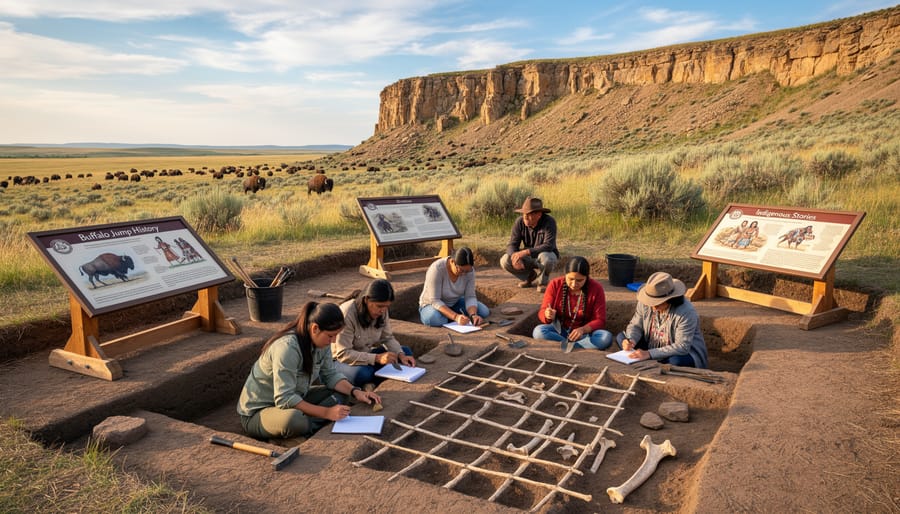
Standing on the windswept Alberta prairie, the cliff known as Head-Smashed-In Buffalo Jump has witnessed nearly 6,000 years of Blackfoot ingenuity. Now, this UNESCO World Heritage Site offers one of Canada’s most sophisticated virtual archaeological experiences, bringing ancient hunting practices to life through your screen.
The virtual tour layers multiple perspectives across time. You begin with sweeping 360-degree views of the cliff and the drive lanes where Blackfoot hunters once guided bison herds toward the precipice. Interactive hotspots reveal how the landscape itself was engineering: gathering basins, cairn markers, and the precise topography that made this location ideal for communal hunting over millennia.
What sets this experience apart is the archaeological dig simulation embedded within the tour. You can excavate virtual layers of bone beds, pottery fragments, and stone tools exactly where researchers uncovered them. Each artifact links to detailed analysis explaining what it reveals about seasonal hunting camps, butchering techniques, and the sophisticated social organization required to harvest and process hundreds of bison. The simulation doesn’t just show you history; it teaches you how archaeologists read it from the earth.
Blackfoot knowledge holders guide the entire journey through video segments filmed on site. They explain the spiritual protocols surrounding the hunt, the role of women in processing every part of the bison, and how this place remains sacred to their communities today. Their narration transforms the cliff from a hunting site into a testament to sustainable resource management and cultural continuity. The virtual experience includes seasonal variations, showing how summer and winter hunts differed and how the landscape changes across the year.
The technical execution is flawless: high-resolution imagery, intuitive navigation, and layers you can toggle on and off to explore different historical periods or archaeological findings.
2. The Halifax Explosion Experience, Nova Scotia
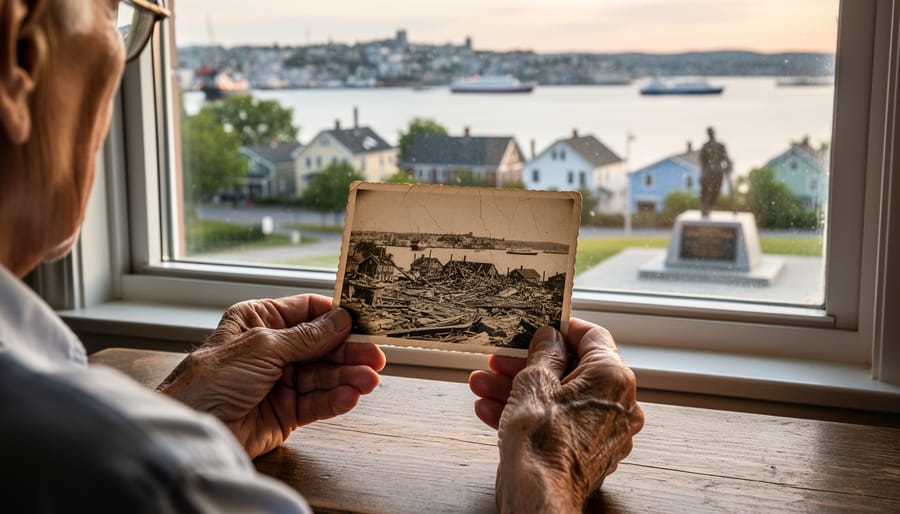
On December 6, 1917, two ships collided in Halifax Harbour, triggering the largest human-made explosion before the atomic age. The Halifax Explosion Experience transforms this defining moment in Canadian history into a visceral virtual journey that places you in the heart of the disaster’s unfolding chaos.
This virtual field trip opens with a peaceful harbour scene at 8:45 a.m., recreated from archival photographs and survivor accounts. You watch the SS Mont-Blanc, laden with wartime explosives, drift toward the SS Imo in the harbour’s narrowest channel. Interactive timeline controls let you slow the twenty-minute approach to collision, while audio overlays feature voices of dockworkers and residents describing what they witnessed that morning.
The explosion sequence itself is handled with both technical precision and emotional restraint. A Parks Canada backgrounder confirms the blast flattened everything within a 2.6-kilometre radius and shattered windows 80 kilometres away. The experience visualizes this devastation through overlapping maps showing blast zones, fire paths, and the tsunami wave that followed. You can click individual buildings to read their fate and the stories of families inside.
What elevates this virtual field trip is its integration of survivor testimonies. Video recordings from descendants share family accounts passed down through generations, while archival letters and diary entries appear as you navigate the ruined cityscape. The recovery section follows relief efforts through photographs and documents, showing how Halifax rebuilt.
Interactive decision points ask how you would respond to the crisis, revealing the impossible choices facing doctors, firefighters, and ordinary citizens. This isn’t just historical observation; it’s an emotional education in resilience and community response that resonates across the century separating 1917 from today.
3. Virtual Walk Through Old Montréal’s Historic District
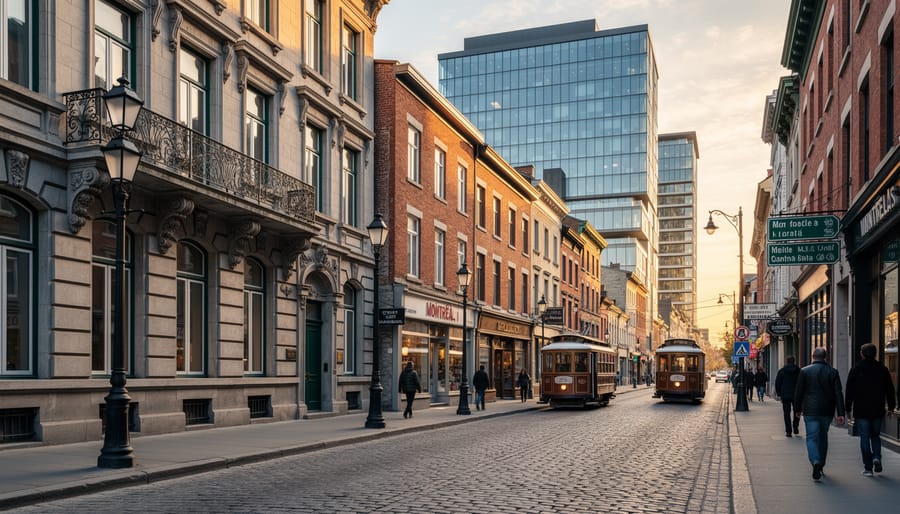
Stepping into Old Montréal through this virtual field trip feels like slipping through time itself. The platform’s signature feature lets you toggle seamlessly between different centuries at any location, watching buildings materialize and transform before your eyes. Stand in Place Jacques-Cartier and swipe from 1672 to see rough wooden structures of New France, then advance to 1867 to watch cobblestone streets and grand Victorian facades emerge during Confederation.
The augmented reality layers add remarkable depth. Point your device at Notre-Dame Basilica to see its construction phases unfold, from the modest 1672 parish church through its Gothic Revival transformation in the 1820s. Pop-up windows share architect James O’Donnell’s original blueprints alongside period photographs. The bilingual narration switches effortlessly between English and French, with French-Canadian historians offering insights into how Montréal evolved from a fur trading post into Canada’s cultural heartbeat.
What sets this virtual walk apart is its focus on everyday life across centuries. You’re not just viewing architecture. Tap hotspots to hear street vendors hawking their wares in 18th-century French, witness virtual reenactments of market days, or explore how the waterfront shifted as commerce grew. The platform includes rarely seen artifacts from Montreal’s archives, personal letters, and period music that changes with each era you select.
The neighbourhood storytelling captures French-Canadian resilience and cultural pride. Narrators explain how residents preserved their language, traditions, and architectural identity through centuries of political change. Interactive maps trace the expansion from the original fortified settlement to today’s boundaries, showing how each generation left its mark on these historic streets.
4. Fortress of Louisbourg Virtual Reconstruction, Nova Scotia
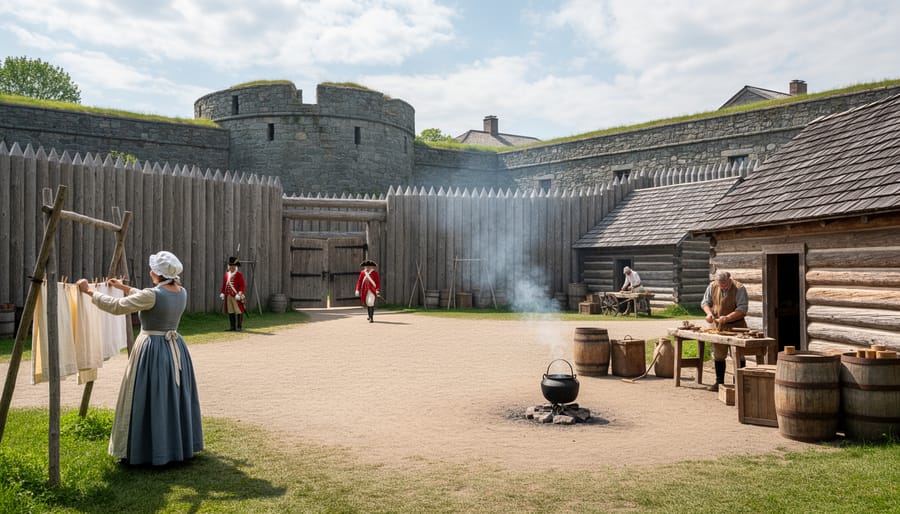
Step through the reconstructed stone gates of North America’s largest 18th-century fortified town without leaving your home. Parks Canada’s Fortress of Louisbourg virtual reconstruction transports you to 1744, the height of French colonial power on Île Royale (Cape Breton Island). This Virtual Historic Experience Opportunity stands out for its theatrical approach, blending meticulous archaeological research with living history elements that make colonial Canada feel immediate and tangible.
The virtual experience divides the fortress into explorable zones, each anchored by costumed interpreters who interact with visitors through pre-recorded scenarios and live-streamed programming during peak seasons. In the Governor’s apartments, you’ll witness formal dinners complete with period table settings and French court etiquette. The soldiers’ barracks reveal the stark contrast of daily military life, with interpreters demonstrating musket drills and discussing recruitment from rural France. At the King’s Bakery, bakers in period dress explain bread production that fed 4,000 residents, while the authentic ovens still operate during special virtual events.
What elevates this virtual field trip beyond static photography is its layered interactivity. Toggle between “inhabited” views showing bustling market squares and “archaeological” modes revealing foundation excavations and artifact locations. The soundscape shifts as you move through spaces, period music and ambient noise from forges, kitchens, and the harbour creating genuine atmosphere. Interactive pop-ups let you examine objects up close, from naval charts to cooking implements, with detailed provenance information.
The virtual reconstruction draws on six decades of archaeological work at the actual site, where only one-quarter of the original fortress has been physically rebuilt. This digital approach makes the complete 1744 townscape accessible for the first time, including structures that exist today only as foundation outlines. Teachers particularly value the role-playing scenarios where students make decisions as merchants, soldiers, or Mi’kmaq traders navigating the complex colonial economy.
5. Indigenous Trail Networks Virtual Experience
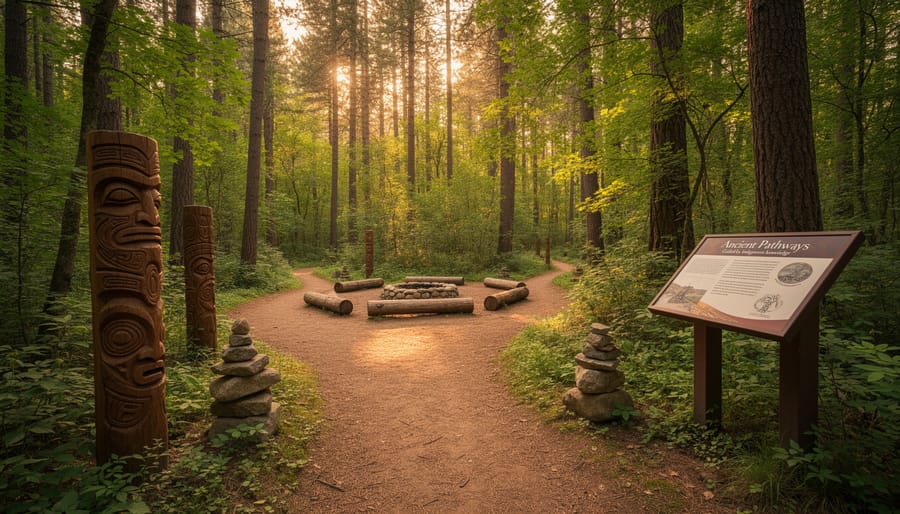
This multi-site virtual experience breaks new ground by centering Indigenous knowledge keepers as guides through networks that connected communities across Turtle Island for millennia. Rather than a single location, the platform weaves together trails from coast to coast, each segment narrated by Elders and cultural practitioners from the nations whose ancestors walked these routes.
The experience opens with a protocol acknowledgment and explanation of the cultural significance of these pathways, setting a respectful tone that continues throughout. You choose from several journey types: trade routes connecting the Pacific to the prairies, northern portage networks, or seasonal gathering trails to fishing and harvesting sites. Each path reveals layers of traditional ecological knowledge, with guides explaining how landmarks served as navigation aids, which plants sustained travelers, and how different seasons transformed the landscape.
Interactive elements include virtual participation in traditional activities tied to specific locations. At a spring fishing camp, you witness weir construction techniques passed down through generations. Along a fall hunting trail, you learn animal behavior patterns and sustainable harvesting practices. The narration shifts between English, French, and Indigenous languages, with translations provided, honoring the multilingual nature of these historic meeting places.
What sets this apart is the emphasis on living culture. Guides connect ancient practices to contemporary Indigenous communities, showing how these trails remain culturally vital today. You hear stories of how families still visit ancestral sites, participate in seasonal rounds, and maintain traditional relationships with the land.
The platform respects protocols around sacred sites by limiting access to areas communities have designated as appropriate for public learning, demonstrating how virtual experiences can honor cultural boundaries while still sharing profound historical knowledge.
6. Underground Railroad Virtual Journey, Ontario
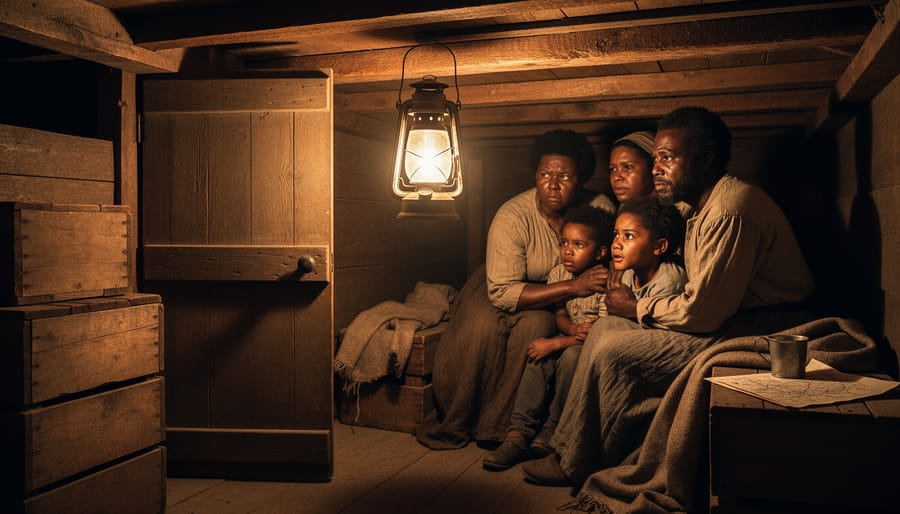
The Underground Railroad Virtual Journey transforms one of Canada’s most significant chapters in Black history into an immersive digital experience that honors the courage of freedom seekers and the communities that supported them. This interactive narrative traces actual escape routes into southwestern Ontario, where thousands found refuge between the 1830s and 1860s.
What sets this virtual field trip apart is its foundation in authentic voices. You’ll encounter oral histories recorded with descendants of both freedom seekers and the Black Canadian communities they established in places like Chatham, Buxton, and Dawn Settlement. These firsthand testimonies bring emotional weight to the journey that historical facts alone cannot convey. One particularly moving segment features letters and diary entries from formerly enslaved people describing their first moments on Canadian soil, their words appearing alongside the very landscapes they traversed.
The experience includes virtual tours of preserved safe houses and Underground Railroad stations scattered across Ontario. You can explore Josiah Henson’s historic site in Dresden, examining the actual buildings where he sheltered families making their way north. Interactive elements allow you to step inside replica quarters, handle digital recreations of freedom documents, and understand the constant tension between hope and fear that defined these journeys.
The journey doesn’t end at the border. You’ll virtually visit thriving Black settlements that emerged across Ontario, learning how freedom seekers built schools, churches, and farms while maintaining cultural connections and supporting new arrivals. The narrative honors their resilience and contributions to Canadian society, challenging simplified “escape to freedom” stories by showing the complex work of building new lives.
This virtual field trip succeeds because it centers Black Canadian voices rather than treating them as passive historical subjects, offering a model for how digital heritage can amplify marginalized narratives.
7. Gold Rush Trail Virtual Trek, Yukon
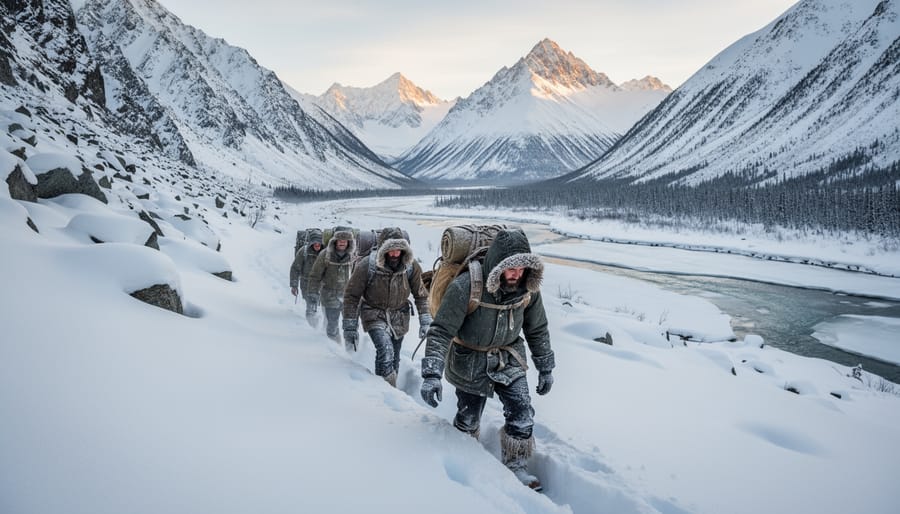
Step into the boots of a Klondike gold seeker with this remarkably immersive virtual recreation that transforms the legendary 1897-1898 gold rush into an interactive journey you control. Unlike passive viewing experiences, this virtual trek places you at crucial decision points along the treacherous route from Skagway to Dawson City, where your choices mirror the real dilemmas faced by the 100,000 stampeders who risked everything for fortune.
The experience opens with authentic period photographs and newspaper clippings that capture gold fever’s grip, then launches you into the grueling reality. You’ll virtually navigate the Chilkoot Pass, watching the gradient steepen as you toggle between historical images of the famous “golden stairs” and 360-degree views of the actual terrain. Interactive elements ask whether you’ll hire packers, carry your own mandatory ton of supplies, or risk the avalanche-prone trail in winter.
What distinguishes this trek is its unflinching portrayal of both triumph and tragedy. Oral histories from descendants of stampeders, First Nations guides, and dance hall entrepreneurs provide multiple perspectives often missing from gold rush narratives. You’ll hear from Tlingit packhorses owners whose business acumen shaped the route, and from women who found independence running roadhouses and businesses in a frontier where traditional gender roles temporarily loosened.
Environmental challenges feel visceral through carefully designed interactive scenarios. Will your virtual party cross the thawing Yukon River ice in spring, or wait for safer passage? The experience tracks how historical weather patterns, disease outbreaks, and supply shortages affected different groups, creating genuine tension even though outcomes are predetermined.
Primary documents including diaries, claim records, and assay reports ground the experience in historical reality, while the social history components explore class divisions, Indigenous displacement, and the disappointment awaiting most who reached the goldfields after prime claims were already staked.
8. Canadian Museum of History Virtual Galleries
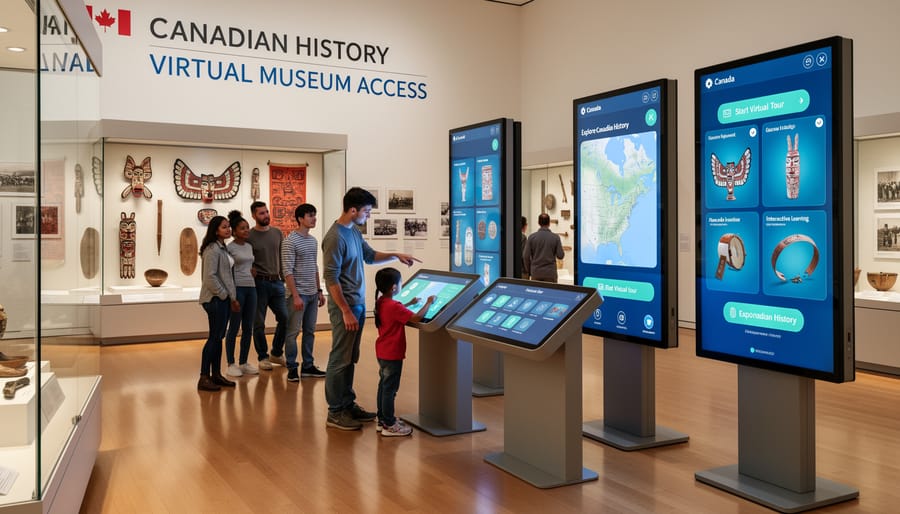
The Canadian Museum of History in Gatineau stands as the country’s most visited museum, and its virtual galleries bring that experience to screens worldwide. Unlike single-site virtual tours, this platform functions as an evolving digital museum that mirrors the physical institution’s commitment to showcasing the full sweep of Canadian stories.
The virtual experience centers on three pillars. The Canadian History Hall offers a chronological journey through 15,000 years, from ice-age migrations to contemporary Canada. You can zoom into individual artifacts, a Norse coin found in Newfoundland, suffragette banners, vintage hockey jerseys, with detail rivaling in-person viewing. Each object links to curator commentary explaining its significance and the research behind its display.
The First Peoples Hall deserves particular attention for its respectful presentation of Indigenous cultures. Virtual visitors explore the Grand Hall’s towering totem poles and plank houses through 360-degree navigation, while Indigenous Knowledge Keepers provide audio narration in their own languages with English subtitles. The interface allows you to filter content by nation, time period, or theme, making it valuable for both casual exploration and focused research.
What sets this virtual offering apart is its treatment of temporary exhibitions. New content appears quarterly, meaning return visits reveal fresh perspectives on Canadian heritage. Recent additions have featured the War of 1812, immigration waves through Pier 21, and evolving interpretations of Confederation. Each exhibition includes downloadable educator kits with lesson plans, primary source documents, and discussion guides aligned with provincial curricula.
The platform’s accessibility features include adjustable text sizes, screen-reader compatibility, and descriptive audio for visually impaired visitors. Virtual field trip organizers can request curator-led live sessions for student groups, transforming passive viewing into interactive dialogue about how museums interpret and present history.
Making the Most of Your Virtual Visit
To get the richest experience from these virtual field trips, start with the basics: a stable internet connection, quality headphones for immersive audio, and the largest screen available. Whether you’re viewing alone or with a group, full-screen mode and minimal distractions transform a quick browse into genuine discovery.
Educators can maximize these resources by building pre-visit context through primary source documents, then using pause-and-discuss moments during the tour to deepen understanding. Many sites offer downloadable activity guides and discussion prompts specifically designed for classroom or family use. For group viewings, assign students different observation roles, one tracking architectural details, another noting cultural practices, a third focusing on environmental features, then compare notes afterward.
The real power extends beyond the screen. Follow up a virtual visit by exploring related local heritage sites, connecting with descendant communities, or researching family histories that intersect with what you’ve seen. These digital doorways make Canadian history accessible to anyone with an internet connection, removing geographical and financial barriers that once kept our shared stories out of reach. That democratization matters: heritage belongs to everyone, and these virtual journeys finally deliver on that promise.
Common Questions About Historical Virtual Field Trips
Virtual field trips raise practical questions for educators, families, and curious explorers. Here are answers to the most common queries about accessing these immersive Canadian heritage experiences.
Do I need special equipment for virtual field trips?
Most experiences work on standard laptops, tablets, or smartphones with updated browsers. VR headsets enhance immersion but aren’t required, 360-degree views function with mouse or touch controls.
Are these virtual tours free to access?
Many Canadian heritage sites offer free virtual experiences, while some museums charge nominal fees comparable to physical admission. Educational groups often receive institutional access at reduced rates.
Can virtual field trips replace visiting historic sites in person?
Virtual experiences complement rather than replace physical visits. They provide accessible previews, reach remote learners, and offer interactive layers impossible on-site, but nothing matches standing where history happened.
How do teachers integrate these into curriculum?
Most platforms include downloadable lesson plans, discussion guides, and pre-visit activities aligned with provincial standards. Group viewing features allow whole-class exploration with pause-and-discuss functionality.
Are virtual tours accessible for visitors with disabilities?
Leading sites incorporate closed captions, audio descriptions, keyboard navigation, and adjustable text sizes. Virtual access often removes physical barriers present at actual heritage locations.
How current are the virtual experiences?
Major sites update content regularly, adding new archaeological findings or seasonal programming. Check platform dates, some experiences evolve continuously while others capture specific restoration periods.
These virtual journeys open Canadian heritage to anyone with internet access. Whether you’re planning classroom lessons, exploring from mobility-limited circumstances, or previewing sites before travel, historical virtual field trips make the past accessible in ways previous generations couldn’t imagine.
